
5 Strategies to Boost Grocery Store Margins in a Competitive Market

Jesse Lopez
Head of Marketing
·
March 24, 2026
·
8
min read

Independent grocers operate on some of the thinnest margins in retail. The average grocery store profit margin sits between 1 and 3% net, meaning every dollar of pricing lag, untracked shrink, or slow checkout is felt immediately. The stores that protect and grow their margins are not necessarily the biggest. They are the ones with the tightest systems: smarter ordering, faster pricing, loyal customers who come back often and spend more every trip.
This guide covers five practical strategies to improve grocery store margins, from inventory discipline to loyalty programs, with a focus on what actually works for independent operators running real stores.
Understanding Grocery Store Margins
Defining Grocery Store Profit Margins
Grocery store profit margin is the percentage of revenue left after all costs are paid. Gross margin reflects the gap between what you paid for product and what you sold it for. Net margin is what remains after labor, rent, utilities, shrink, and overhead.
For most independent grocers, gross margins run 25 to 35%. Net margins often land below 3%. That gap between what you earn on product and what you take home is where margin discipline lives. Every dollar of unnecessary cost, every item sold below margin, every hour of labor spent on manual work that could be done faster: it all flows through to the bottom.
The Importance of Grocery Store Margins in Business Success
Margin is not just an accounting line. It funds everything that comes next. It pays for new hires, equipment upgrades, remodels, and eventually new locations. Without it, you are trading dollars with no room for investment or resilience.
Independent grocers face this pressure acutely. National chains bring volume pricing, centralized procurement, and purpose-built technology. Independent operators compete without those advantages, but win on local relationships, community loyalty, and the ability to move faster than a chain ever could. Protecting margin is what keeps that advantage alive.
Strategy 1: Optimize Labor with Inventory Management
The fastest way to protect grocery store margins is to know exactly what you have, what it costs, and where it is going. Inventory that is not tracked is margin that quietly disappears through shrink, overstock, or items sitting past their sell-by date while your team guesses at what to reorder.
Use Sales Movement Data to Build Smarter Vendor Orders
Ordering from instinct instead of data is one of the most common margin leaks in independent grocery. Too much of the wrong product means markdowns. Too little means lost sales. The fix is not a forecasting algorithm. It is ordering from what actually sold.
Vori's Order Management gives your team 7 and 30-day sales movement data and last-order quantities at the moment you are building an order, on a handheld, from the floor. Your team scans product and Vori splits the order by vendor automatically. Flags surface when minimums are not met or vendor codes do not match, catching errors before they become problems at receiving.
Track Inventory Shrink to Avoid Overstock and Waste
Shrink (damage, spoilage, theft) is one of the hardest margin drains to quantify, because most of it goes unrecorded until it shows up as a gap at the end of the month.
Vori's Shrink Tracking lets your team record shrink from the floor in real time using a mobile handheld. Reason codes keep the data clean. Inventory updates the moment shrink is recorded. Department-level reporting shows where shrink is concentrated by item, by reason, and over time, so you can address it at the source rather than absorbing it as a mystery loss. When product is approaching expiration, markdown tools let you trigger flash sales to move it before it becomes a full loss.
Strategy 2: Operate Faster with Grocery Technology
The right grocery technology does not add complexity. It removes the friction that slows your store down and costs you money. Slow checkout, pricing that lags vendor costs, reports you have to be at the store to run: these are operational drains that compound across every shift, every day.
Improve Checkout Efficiency with a Grocery POS System
Checkout is the last impression a shopper takes with them. A slow lane, a pricing error, or a system that cannot handle a variable-weight item from the deli does not just create frustration. It erodes trust and costs you repeat visits.
Most generic retail POS systems are not built for how grocery actually works: variable weights, produce, multi-lane peak hours, offline reliability. Vori's Point of Sale is built from the ground up for grocery. It handles variable-weight items without slowing the line, stays reliable when connectivity drops, and integrates pricing, payments, and loyalty in a single checkout flow.
Run Your Store from Anywhere with Cloud-Based Reporting
Most independent operators are not at the store every hour. But their margins are affected by what happens every hour. End-of-day surprises, a cash drawer that does not balance, a department that underperformed, are harder to fix after the fact.
Vori's Reporting and Insights puts your numbers in your pocket. Sales, cash, tills, cashier performance, loyalty basket comparisons, and inventory movement are all accessible from your phone.
Strategy 3: Protect Margins with Smarter Pricing Strategies
Pricing is where independent grocers lose the most margin they do not know they are losing. Vendor costs change constantly. If your shelf prices do not keep up, you are absorbing the increase on every unit sold, often without realizing it until you pull a margin report at the end of the month.
Use Automated Vendor Cost Tracking to Protect Grocery Store Margins
The average grocer manages thousands of SKUs across dozens of vendors. When a vendor raises a cost, even by a few cents, that change needs to reach the shelf price before the next sale. Manual price book maintenance cannot keep pace.
Vori's Pricing Automation detects cost changes directly from invoices as they are received. When a vendor increases or decreases a price, Vori flags it immediately and surfaces margin-based pricing suggestions so you can review and approve in one click. Prices sync instantly to checkout, shelf tags, and reports.
Offer Bundle and Combo Pricing to Grow Average Transaction Size
Protecting margin is not only about cost control. It is also about growing the top line without discounting your way there. Bundle pricing moves product, rewards shoppers, and grows basket size without eroding individual item margins when built correctly.
Vori's promotions engine, part of Shopper Engagement, supports mix-and-match, combo deals, BOGO, spend thresholds, and percent-off, all applied automatically at checkout when a qualifying combination hits the basket. No cashier math. No override codes. The promotion fires when it should, stops when it should not, and tracks performance so you know what moved product and what did not.
Strategy 4: Grow Sales and Margins with Loyalty and Promotions
Loyal customers are your most profitable customers. They visit more often, spend more per trip, and respond to promotions at higher rates. Building a loyalty program that enrolls shoppers and keeps them engaged is one of the highest-return margin investments an independent grocer can make.
Loyalty Programs That Drive Repeat Visits and Bigger Baskets
Most loyalty programs fail at step one: enrollment. If signing up requires an app download or a form, most shoppers will not do it. A loyalty program with low enrollment delivers low returns.
Vori enrolls customers by phone number at checkout in seconds: no app, no kiosk, no friction. Rewards are store-branded, your name, your relationship with the shopper. Valley Farm Market saw +22% net sales and +10% basket lift among loyalty members, with 10,000+ shoppers enrolled in rewards.
Targeted Promotions Through SMS Marketing to Drive Traffic
A loyalty database is only as valuable as what you do with it. SMS marketing turns enrolled shoppers into a direct channel you control: no algorithm, no ad spend, no middleman.
Vori's SMS tools let you reach enrolled shoppers directly with offers, new arrivals, and store news. Vori tracks campaign performance and basket lift so you can see which messages drove traffic and where to focus next.
Strategy 5: Explore New High-Margin Revenue Streams
Once your core operation is tight, you have the headroom to grow beyond it. The stores that expand revenue successfully are the ones where the foundation, POS, inventory, ordering, pricing, is already running cleanly. Adding a new revenue stream on top of a broken operation multiplies the problems, not the profits.
Add Food Service to Increase Basket Value and Visit Frequency
More shoppers are replacing restaurant meals with grocery store prepared foods. According to The Food Industry Association's 2025 report, the share of shoppers substituting deli-prepared foods for restaurant meals has more than doubled since 2017, with roughly one in four buying prepared foods weekly. Prepared food departments typically generate gross margins in the 40 to 60% range, well above most center-store categories, and create new traffic occasions beyond the weekly stock-up trip.
Execution is where most stores get stuck. Retail POS systems were not built for made-to-order workflows, and when food service runs outside your main system it creates reporting gaps, slower checkout, and extra labor.
Vori's quick food service tools are built directly into the grocery POS. An AI Menu Builder structures menu items and modifier groups from a simple prompt. Orders print as clean kitchen tickets. Made-to-order items and grocery products share the same basket and check out together. Food service sales flow into the same end-of-day reporting as the rest of your store.
Offer Gift Cards to Increase Spend Among Your Best Customers
Gift cards are one of the lowest-effort, highest-return additions an independent grocer can make. When a loyal customer buys a gift card for a friend or family member, you have acquired a new customer at zero marketing cost. When that card is used, average redemption spend tends to exceed the card value, meaning gift card transactions often produce larger baskets than a standard visit.
Physical and digital gift cards are integrated directly into Vori's Payments flow. No separate system. No manual reconciliation. Gift card balances appear in the same checkout flow as every other tender type, and transaction data flows through to your reporting automatically.
Conclusion: Sustaining Grocery Store Profit Margins in a Dynamic Market
Improving grocery store profit margins is not a single move. It is a set of disciplines that compound over time. Smarter ordering reduces waste. Faster pricing captures margin before it slips. Loyalty programs grow the baskets that matter most. And when the core operation runs cleanly, new revenue streams become opportunities instead of risks.
Independent grocers who protect their margins are not just keeping the lights on. They are building the kind of operation that can grow, weather cost pressure, and outlast the chains that underestimate them.
Ready to see how a connected grocery operating system protects margin and grows sales from checkout to the back office? Book a demo.
You may also like

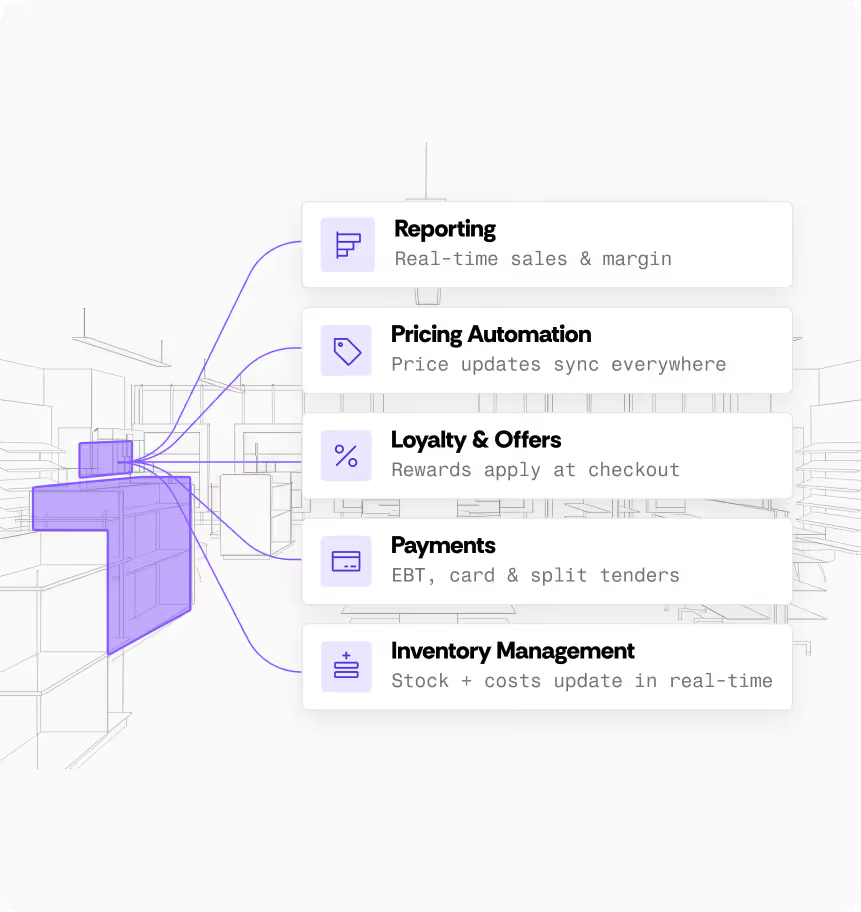
POS, Pricing, Inventory, Loyalty: Why Your Grocery Tools Need to Share the Same Data
Learn why the problem isn't your grocery tools but the gaps between them. When POS, pricing, inventory, and loyalty don't share data, you lose margin you can't see. Here's what connecting them changes.
POS, Pricing, Inventory, Loyalty: Why Your Grocery Tools Need to Share the Same Data
Learn why the problem isn't your grocery tools but the gaps between them. When POS, pricing, inventory, and loyalty don't share data, you lose margin you can't see. Here's what connecting them changes.
Explained
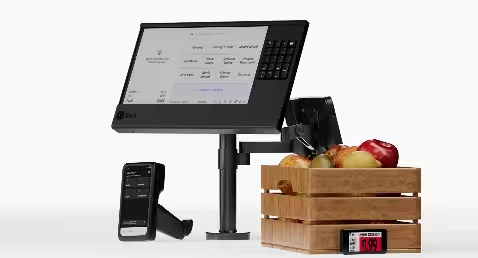
The Complete Guide to Grocery Store Management Software in 2026 (Features That Actually Matter)
Most grocery store management software is built for general retail, not grocery. Here are the capabilities that actually matter for independent stores, and why they only pay off when they connect.
The Complete Guide to Grocery Store Management Software in 2026 (Features That Actually Matter)
Most grocery store management software is built for general retail, not grocery. Here are the capabilities that actually matter for independent stores, and why they only pay off when they connect.
Buyer's Guide