
Vori vs Toast
Run grocery on a system built for grocery
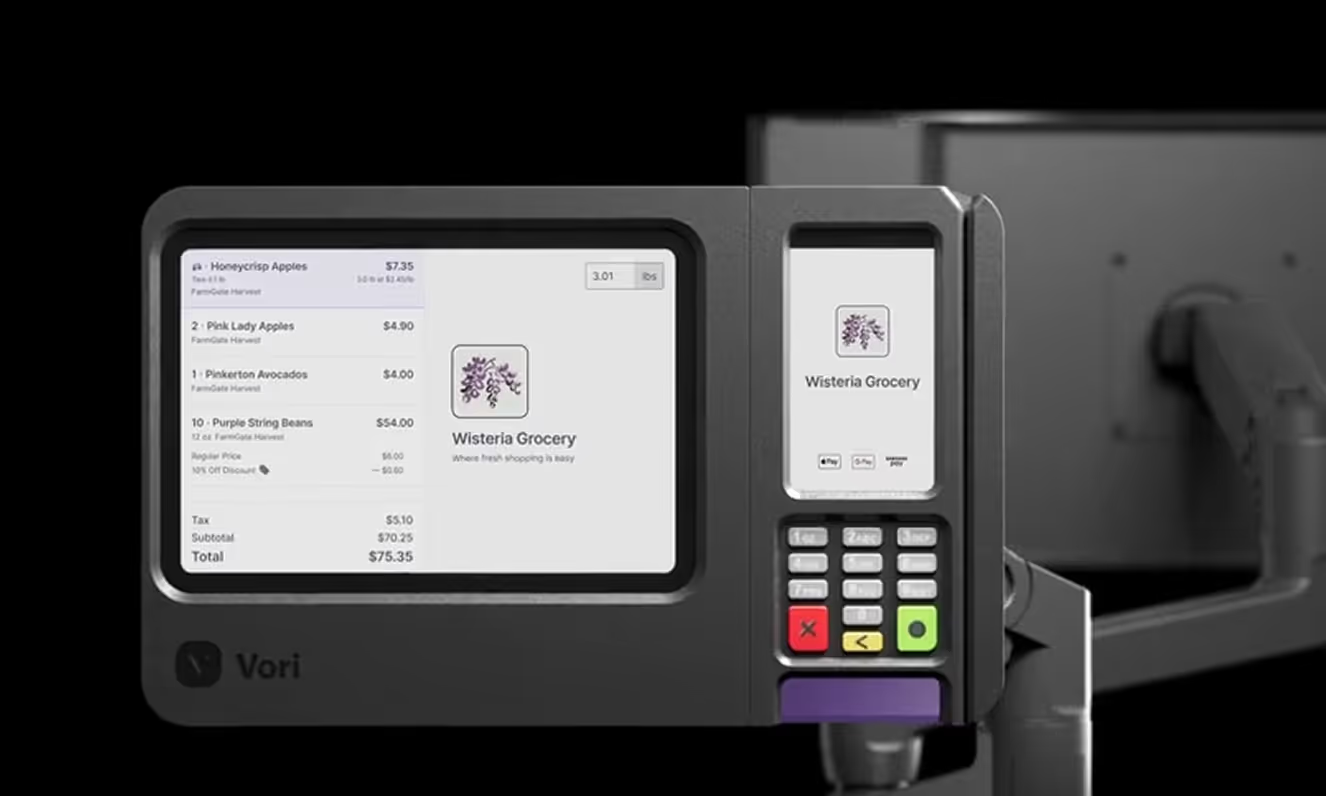
Toast was built for restaurants and later adapted for retail. Vori, the all-in-one grocery POS system, is purpose-built for grocery stores managing thousands of SKUs, constant price changes, and complex daily operations.

Rush hour with Toast was very time consuming. Now with Vori, we've been able to regain those minutes back.
Mauro
General Manager
at
Dat Moi Market
in
Gardena, CA
Why independent grocers choose Vori

Built for grocery volume and complexity
Running a grocery store means managing thousands of items, variable weights, DSD vendors, and constant price changes.
Back office that actually works for grocery
Pricing, margins, ordering, receiving, and cost changes are handled together instead of patched onto a restaurant system.
Everything works together
Checkout, pricing, ordering, inventory, and loyalty work together without juggling vendors or tools.
Vori vs Toast at a glance
Toast (for Retail)
Purpose-built for independent grocery stores
Restaurant system adapted for retail
Designed for thousands of items
Best suited for smaller assortments
Deep, margin-first grocery pricing tools
Basic retail pricing
Fully integrated DSD workflows
Under supported
Multi-vendor grocery ordering built in
Limited retail ordering
Built for multi-lane grocery checkout
Less suited to high-volume grocery
Grocery-ready, flexible hardware
Bundled restaurant-style hardware
Scales with grocery volume and complexity
Better for smaller operations
Why Toast breaks down for grocery
Restaurant roots show up fast
Systems designed for menus struggle with thousands of SKUs, frequent price changes, and variable-weight items.
Back-office workarounds
Without strong grocery pricing, margins, and DSD tools, teams rely on spreadsheets and manual checks.
Growth hits friction
As volume, lanes, and vendors increase, Toast’s retail tools can’t keep pace with grocery operations.
Run grocery on technology built for grocery
See how Vori handles the volume, complexity, and pace of real grocery operations.
FAQs
Everything you need to know about Vori. Can’t find the answer you’re looking for? Please chat to our friendly team.