
Step-by-Step Guide to Digitizing Back Office Operations in Your Grocery Store

Jesse Lopez
Head of Marketing
·
March 15, 2026
·
7
min read
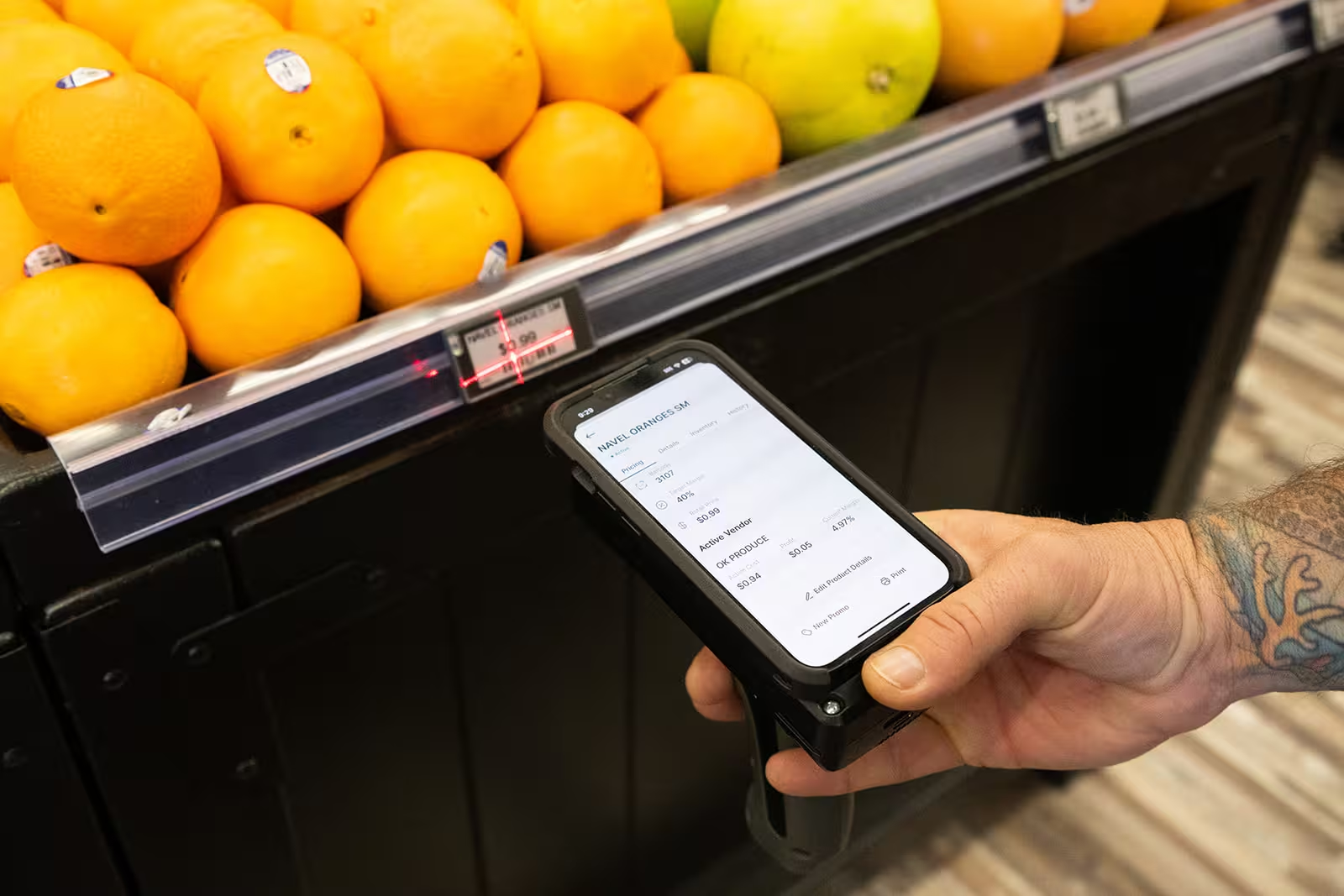
Many independent grocers still rely on paper invoices, handwritten order notes, spreadsheets, and other manual processes to run their back office operations. These tasks are necessary for keeping shelves stocked and the store running smoothly, but they often require hours of administrative work each week. Processing invoices, writing orders, updating prices, and tracking inventory manually can quickly take time away from the sales floor and the customers who depend on the store.
Modern grocery back office software replaces these manual workflows with digital tools that simplify everyday operations. By digitizing ordering, vendor management, invoicing, and inventory management, grocers can reduce errors, work more efficiently, and make faster decisions using real-time data.
This guide walks through practical steps to digitize grocery back office operations and modernize the systems that keep the store running. Platforms like the Vori Operating System provide a cloud-based approach that connects vendor management, ordering, invoicing, pricing, and inventory into one unified platform designed specifically for independent grocers.
Understanding Grocery Back Office Software and What It Does
Grocery back office software refers to the digital systems that support the operational work required to run a grocery store. While POS software manages what happens at the checkout lane, back office software supports the day-to-day work that keeps the store stocked and organized.
This includes tracking inventory, writing and sending orders to suppliers, reviewing invoices, and monitoring product costs. For many years, grocers handled much of this work with paper records or spreadsheets, which slowed things down and made mistakes more likely.
Bringing these processes into one system makes everyday work easier. Instead of typing invoice data by hand or updating prices in multiple places, modern back office software handles many of these steps automatically and keeps information connected across the store. This helps grocers save time, reduce errors, and make decisions using up-to-date information.
Step 1: Eliminate Paper Invoices with Digital Invoice Processing
Paper invoices are still common in grocery stores, especially when working with multiple distributors and DSD vendors. Grocers often spend hours collecting invoices, checking product costs, and manually entering information into spreadsheets or accounting systems.
This manual process creates opportunities for delays and errors. Handwritten notes, misplaced invoices, and incorrect data entry can all lead to problems that affect inventory records and pricing decisions.
Digital invoice processing helps eliminate these issues by capturing invoice data electronically. With systems like Vori, grocers can upload invoices directly into the platform or take photos of paper invoices to digitize them for review. Instead of sorting stacks of paperwork, grocers can review supplier invoices digitally and confirm quantities and costs in one place.
How Automated Digital Invoicing Works
Digital invoice processing reads invoice details automatically when an invoice is uploaded or scanned. The system identifies key information such as invoice numbers, supplier details, product line items, taxes, and totals.
This information is organized and added to the back office system without manual typing. Instead of entering each item line by line, grocers can review the invoice and confirm the details directly in the system.
Studies show that automated invoice processing can be three times faster than manual methods and can reduce invoice processing costs by up to 50%. By removing manual data entry, grocers free up time to focus on inventory management, merchandising, and running the store.
The Cost of Manual Invoice Processing
Manual invoice processing carries significant hidden costs. Entering invoice data by hand typically takes two to twelve minutes per invoice, depending on complexity and the number of items listed.
Error rates also increase with manual processes. Industry studies estimate invoice processing error rates between 1% and 4%, which may seem small but can lead to incorrect inventory counts, pricing discrepancies, or supplier payment disputes.
The financial impact can be significant as well. Processing invoices manually can cost an average of $15 per invoice, while digital processing reduces that cost to around $7 per invoice. Paper invoices also require physical storage, scanning, routing for approval, and occasional duplicate requests when documents are lost.
Step 2: Streamline Vendor Management and Multi Vendor Ordering
Vendor ordering is another area where many grocery stores still rely on outdated workflows. Phone calls, faxes, handwritten order guides, and spreadsheets are still commonly used to place orders with suppliers.
Digital ordering platforms simplify this process by connecting grocers directly to distributors and suppliers through a single interface. Vori’s order management system gives grocers access to distributors and brands representing more than 1.3 million products.
With digital ordering, grocers can write multi-vendor orders from anywhere using a mobile device or computer. They can view sales movement data, discover new items, and place orders without relying on manual communication with vendors.
Features That Simplify Ordering and Receiving
Digital ordering systems include features designed to streamline everyday grocery operations. Vori supports scan-based receiving, allowing grocers to confirm delivered products quickly and accurately when shipments arrive.
The platform also includes tools such as Autofill and the Vori Master Catalog, which help maintain consistent product information and pricing data across the system. Instead of manually updating product catalogs or entering item details, these tools automatically enrich and standardize product data.
Customizable reporting tools allow grocers to review the operational metrics that matter most. Sales performance, inventory levels, and supplier activity can all be analyzed without manually compiling data from multiple systems.
DSD Vendor Management and Supplier Integration
Direct store delivery (DSD) vendors are a major part of grocery operations. Beverage distributors, snack suppliers, and specialty brands often deliver products directly to stores instead of through centralized distribution.
Managing these relationships manually can be complicated because each vendor may follow different ordering and invoicing processes. Digital vendor management systems bring these interactions into one platform.
With integrated supplier connections, grocers gain visibility into supplier data, product catalogs, and delivery schedules. This transparency helps maintain consistent inventory levels and makes it easier to work with vendors. Research suggests digital supplier integration can reduce the time required to replenish inventory by up to 80%.
Step 3: Implement Cost Change Tracking and Pricing Automation
Wholesale product costs change frequently in grocery retail. Without reliable cost tracking, grocers risk selling products at outdated prices that reduce margins.
Digital pricing automation tools help protect profitability by automatically monitoring supplier cost changes. When vendors update their prices, the system alerts grocers so retail prices can be adjusted accordingly.
Platforms like Vori include margin protection tools that provide pricing alerts when wholesale costs and retail prices are mismatched. Features such as intelligent pricing suggestions, electronic shelf label integration, and mobile shelf tag printing help grocers update prices quickly and accurately.
Why Margin Protection Matters for Independent Grocers
Margins in grocery retail are typically very tight, often ranging between 1% and 3%. Even small pricing errors can quickly affect overall profitability.
Manual pricing updates make it difficult to keep up with frequent supplier cost changes. Store teams may not notice price increases until weeks later, leaving products temporarily underpriced.
Pricing automation helps prevent these situations by identifying cost changes immediately. Many store owners describe this functionality as having a pricing coordinator built into the system, helping them protect margins without adding additional staff or administrative work.
Step 4: Centralize Operations with Cloud-Based Back Office Tools
Cloud-based grocery software allows grocers to manage operations from anywhere with an internet connection. Instead of relying on a single office computer or local server, store data can be accessed from mobile devices, laptops, or other connected devices.
This flexibility allows grocers to review reports, approve invoices, or update pricing even when they are not physically in the store. All system updates sync automatically in real time, eliminating the overnight batch processing common in legacy systems.
Cloud platforms also make it easier to keep information consistent across the entire operation because everything is stored and updated in one place.
Integration Across Your Entire System
Modern grocery platforms connect back office operations with POS, pricing tools, ordering systems, and customer engagement features. Instead of operating separate systems for each task, everything works together within a single platform.
This integration reduces errors, eliminates duplicate data entry, and ensures that all departments operate from the same source of truth. Inventory changes update automatically across ordering, pricing, and reporting systems.
Most stores adopting Vori can go live within weeks rather than months. One customer described the onboarding experience simply: “Every new employee is able to catch on right away and use the actual POS system.”
Step 5: Move from Spreadsheets to Real-Time Reporting and Insights
Spreadsheets and paper reports often create information silos inside grocery stores. Data may be spread across multiple files and systems, making it difficult to see a complete picture of store performance.
Digital back office systems replace these fragmented workflows with centralized reporting tools. Instead of compiling reports manually, grocers can view operational data in real time.
Vori provides reporting tools that track ordering activity, inventory levels, and pricing changes. Because this information is automatically updated, grocers can make faster decisions using accurate and current data.
Transform Your Grocery Operations with Vori
The Vori Operating System is designed to digitize grocery back office operations for independent grocers. The platform includes automated ordering, digital invoicing, cost change tracking, scan-based receiving, DSD vendor management, and pricing automation.
Many grocery stores using Vori have seen measurable operational improvements. Some report revenue growth of up to 20% year over year after modernizing their systems.
Legacy grocery systems such as NCR, ECRS, and LOC were designed decades ago for a different retail environment. Vori is built for today’s grocery challenges, offering faster onboarding, easier management, and more flexibility.
Request a demo to see how quickly your store can digitize back office operations and modernize the systems that support your business.
You may also like

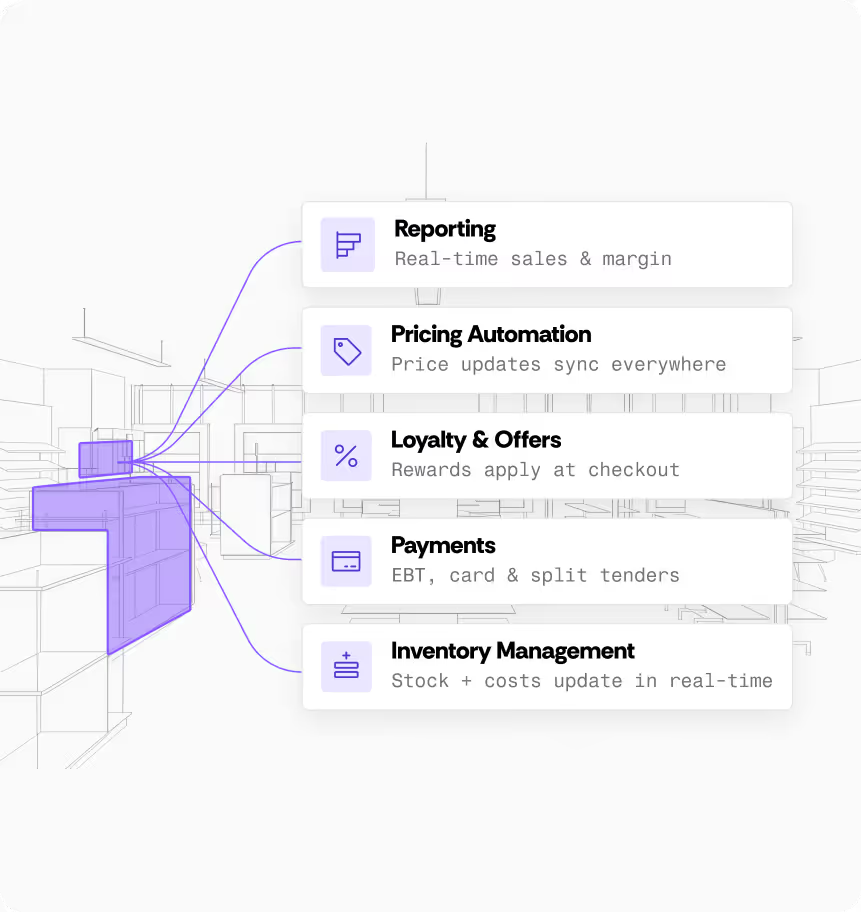
POS, Pricing, Inventory, Loyalty: Why Your Grocery Tools Need to Share the Same Data
Learn why the problem isn't your grocery tools but the gaps between them. When POS, pricing, inventory, and loyalty don't share data, you lose margin you can't see. Here's what connecting them changes.
POS, Pricing, Inventory, Loyalty: Why Your Grocery Tools Need to Share the Same Data
Learn why the problem isn't your grocery tools but the gaps between them. When POS, pricing, inventory, and loyalty don't share data, you lose margin you can't see. Here's what connecting them changes.
Explained
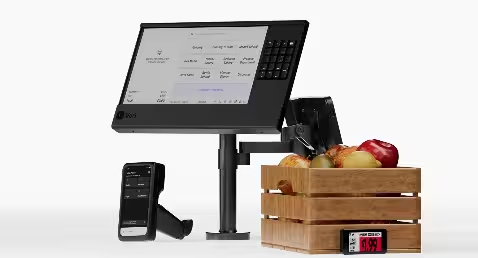
The Complete Guide to Grocery Store Management Software in 2026 (Features That Actually Matter)
Most grocery store management software is built for general retail, not grocery. Here are the capabilities that actually matter for independent stores, and why they only pay off when they connect.
The Complete Guide to Grocery Store Management Software in 2026 (Features That Actually Matter)
Most grocery store management software is built for general retail, not grocery. Here are the capabilities that actually matter for independent stores, and why they only pay off when they connect.
Buyer's Guide