
The Modern Grocery Playbook: Four Habits To Run A Stronger Store

Jesse Lopez
Head of Marketing
·
June 15, 2026
·
15
min read
High-performing independent grocers share four habits: fast checkout, daily pricing discipline, connected ordering, and loyalty built into checkout.
Independent grocers face real pressure right now. Costs keep climbing. Labor is tight. Legacy systems make even simple tasks take longer than they should. And shoppers have more options than ever.
But the stores that are growing aren't just working harder. They've built discipline around a short list of fundamentals that show up in every high-performing independent, across formats and geographies. That's what this playbook is about.
Each of the four habits presented in this guide addresses a real operational gap. Each one is grounded in what we've seen work across hundreds of stores. And each one maps directly to the numbers that move a grocery business forward.
What Strong Stores Have in Common: The Four Fundamentals
Winning stores don't look the same, but they run the same. A 3-lane neighborhood market in New Mexico and a 10-lane full-service store in California may serve completely different communities. Underneath, they're watching the same numbers and making the same kinds of decisions every single day.
Strong stores aren't strong because they have the best location or the most capital. They're strong because their teams have built discipline around a short list of fundamentals, and their systems make it easier to maintain that discipline than to abandon it.
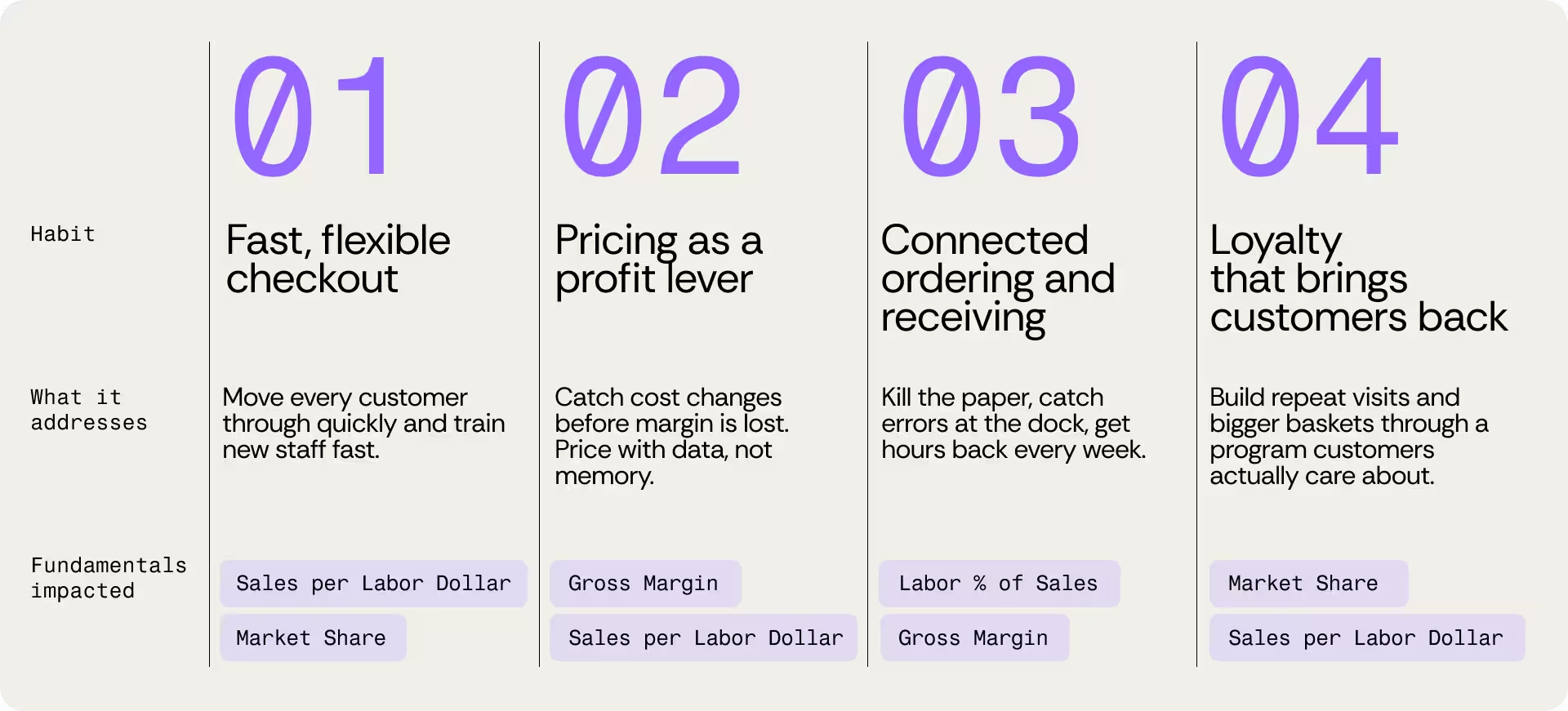
Four numbers show up consistently in every high-performing independent we've worked with. These aren't vanity metrics. They're the levers that actually move the business:

Each habit in this playbook drives one or more of the fundamentals. The goal isn't to add more to your plate. It's to make sure the work your team already does produces better results.
Habit 1: Make Checkout Fast, Flexible, and Easy for Everyone
Why it matters
Checkout is the last thing your customer experiences before they walk out the door. Whether it felt fast or slow, smooth or frustrating, that moment shapes whether they come back. A long line during the Friday evening rush doesn't just annoy the people standing in it. It becomes the memory they carry about your store.
Checkout is also a labor efficiency problem, not just a customer experience one. When the system is slow or confusing, your cashiers spend energy working around it instead of serving the customer in front of them. New staff take longer to get up to speed. Mistakes require more cleanup. Managers get pulled into troubleshooting instead of running the floor.
The stores that get checkout right treat it as the foundation everything else builds on. When the register is fast and reliable, everything downstream gets easier: loyalty enrollment happens at the moment of purchase, labor scheduling gets more predictable, and shrink from cashier error goes down.
How to tell if checkout is costing you
Most stores have normalized slow checkout because it's always been that way. These are the signals worth paying attention to:
What this looks like in a well-run store
Strong stores share a handful of things at the register:
- Fast item lookup, with produce, deli, and variable-weight items ringing through without a second step.
- Consistent performance during rush hours. The system holds when you need it most, not just when traffic is light.
- Every tender type in one flow: credit, debit, cash, SNAP EBT, eWIC, house accounts, and gift cards, with no workarounds.
- New cashiers who can process a full transaction confidently within an hour or two of training.
Getting here doesn't require expensive hardware or months of implementation. It requires a system built for grocery, one that understands produce ring-ups, tender splits, and real-world peak hours, rather than one adapted from a restaurant platform or general retail software.
Self-Assessment: Fast, flexible checkout
Most stores have normalized slow checkout because it's always been that way. These are the signals worth paying attention to:
- Can a new cashier process a full transaction confidently within two hours of training?
- Do variable-weight items (produce, deli, meat) ring through without an extra step?
- Does your system handle SNAP EBT and eWIC in a single checkout flow?
- Does your system hold speed and reliability during your peak rush hours?
- Are loyalty points visible to the customer at the display during checkout?
In Practice: Faster checkout in Montana
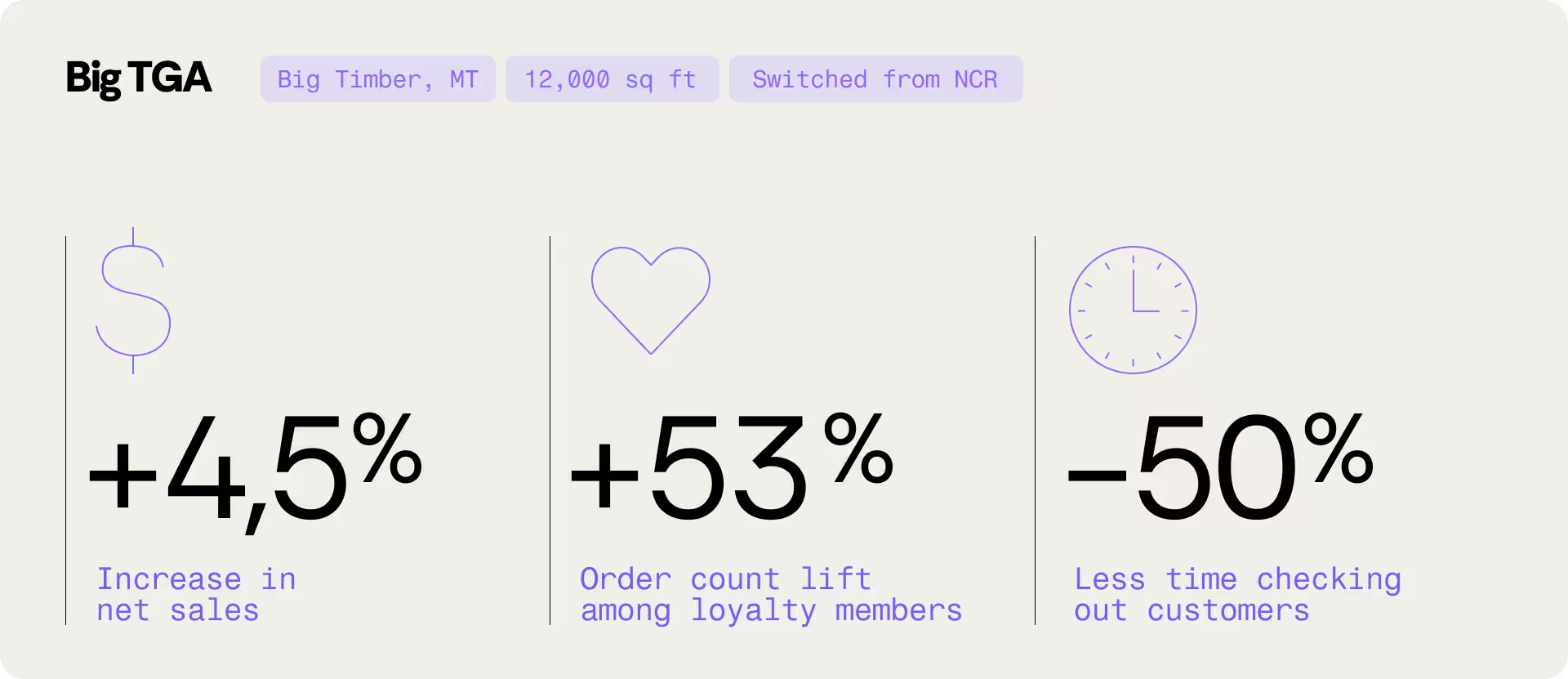
Big Timber, Montana has a population of just over 2,000 people. Big T IGA is their only grocery store. For Aaron, the owner, that means checkout isn't just a transaction. It's often the main point of connection his community has with his store. So when the system was slow, hard to train on, and expensive to maintain, it wasn't just an operational problem. It was a community problem.
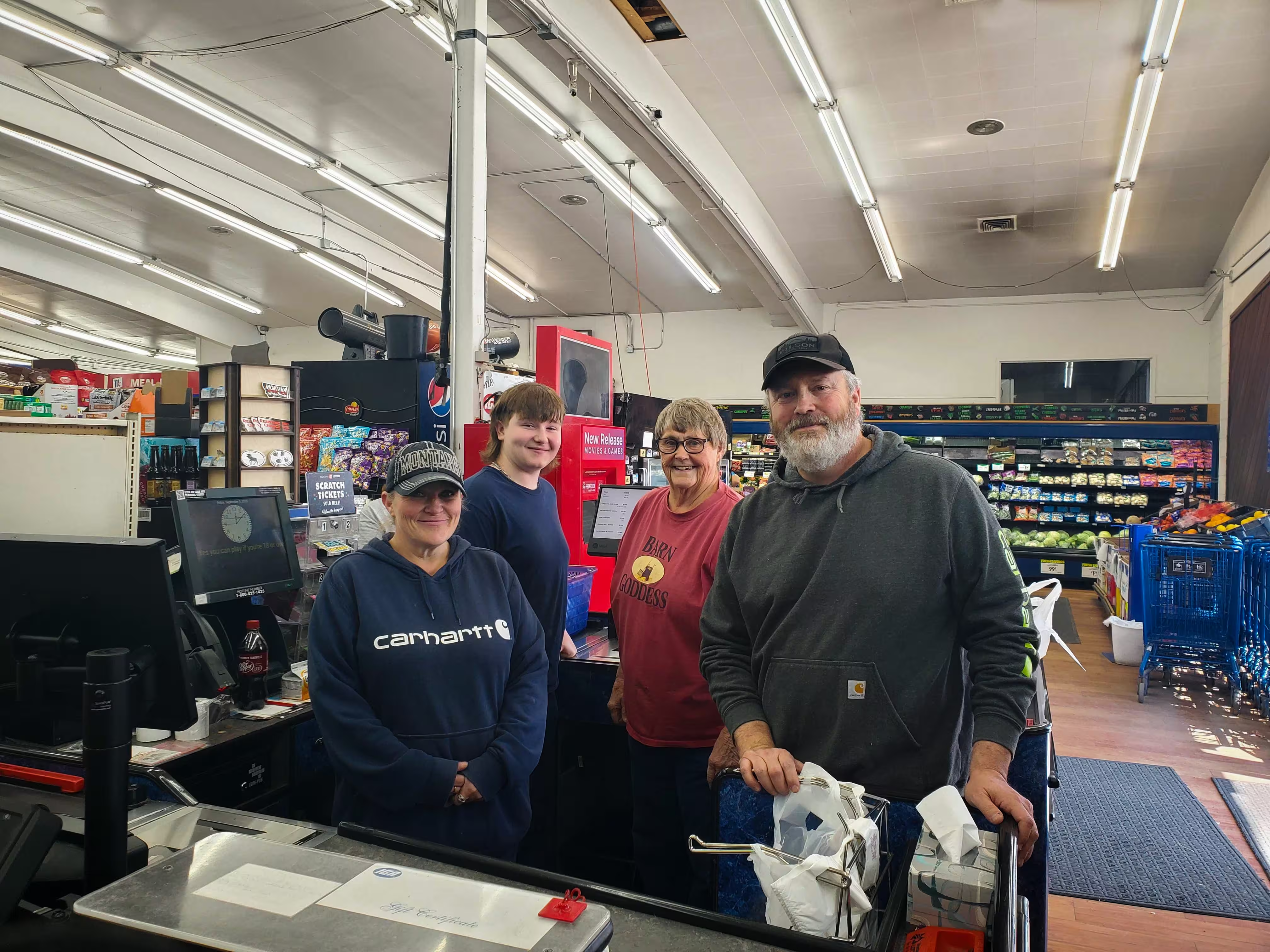

"Vori has NCR beat on everything. Even if they cost more, I'd still go with Vori. They treat you like people."
Habit 2: Treat Pricing as a Profit Lever, Not Busywork
Why it matters
Grocery margins are thin. A fraction of a point matters. Costs change constantly, from your largest distributor and from your smallest DSD vendor, and every time a cost goes up and your shelf price doesn't follow, you're giving away margin you didn't plan to give.
The problem in most independent stores isn't a lack of care. It's a lack of visibility. Pricing gets managed through a combination of spreadsheets, paper invoices, manual shelf tag updates, and institutional memory. There's no system that reliably flags cost changes the moment they happen, compares current shelf prices to what you're actually paying, and pushes updates to checkout and shelf tags at the same time.
The result is predictable. Items get sold at or below cost without anyone realizing it. Pricing changes are always incomplete. Department heads make judgment calls without real data behind them. And margin leaks across hundreds of SKUs, quietly, week after week.
How margin actually gets lost
Margin erosion in independent grocery rarely happens in one big moment. It happens across dozens of small ones every week that go unnoticed:
What this looks like in a well-run store
Stores with strong pricing discipline have turned cost change management into a daily habit rather than a periodic cleanup project. It doesn't take a dedicated pricing manager. It takes a system that surfaces changes automatically and makes approvals fast:
- Every invoice processed triggers a comparison to current shelf pricing. Discrepancies surface immediately, before the product is already on the shelf at the wrong price.
- Department heads can see their margin by item, not just by category. They own their numbers and have the tools to act on them.
- When a cost change is flagged and a new price is recommended, the approval takes seconds. The change flows immediately to checkout, shelf tags, and reporting.
- Price updates that used to take an hour or more happen in minutes, sometimes seconds with electronic shelf labels.
Self-Assessment: Pricing discipline
- Do you receive an alert when a vendor raises their cost?
- Can you see your margin on a specific item without opening a spreadsheet?
- How long does it take to update a shelf price and have it reflect at checkout? (Under two minutes is the target.)
- Can department heads manage their own pricing adjustments independently?
- Do you have a record of what you paid versus what you received on every invoice?
In Practice: Pricing management in California
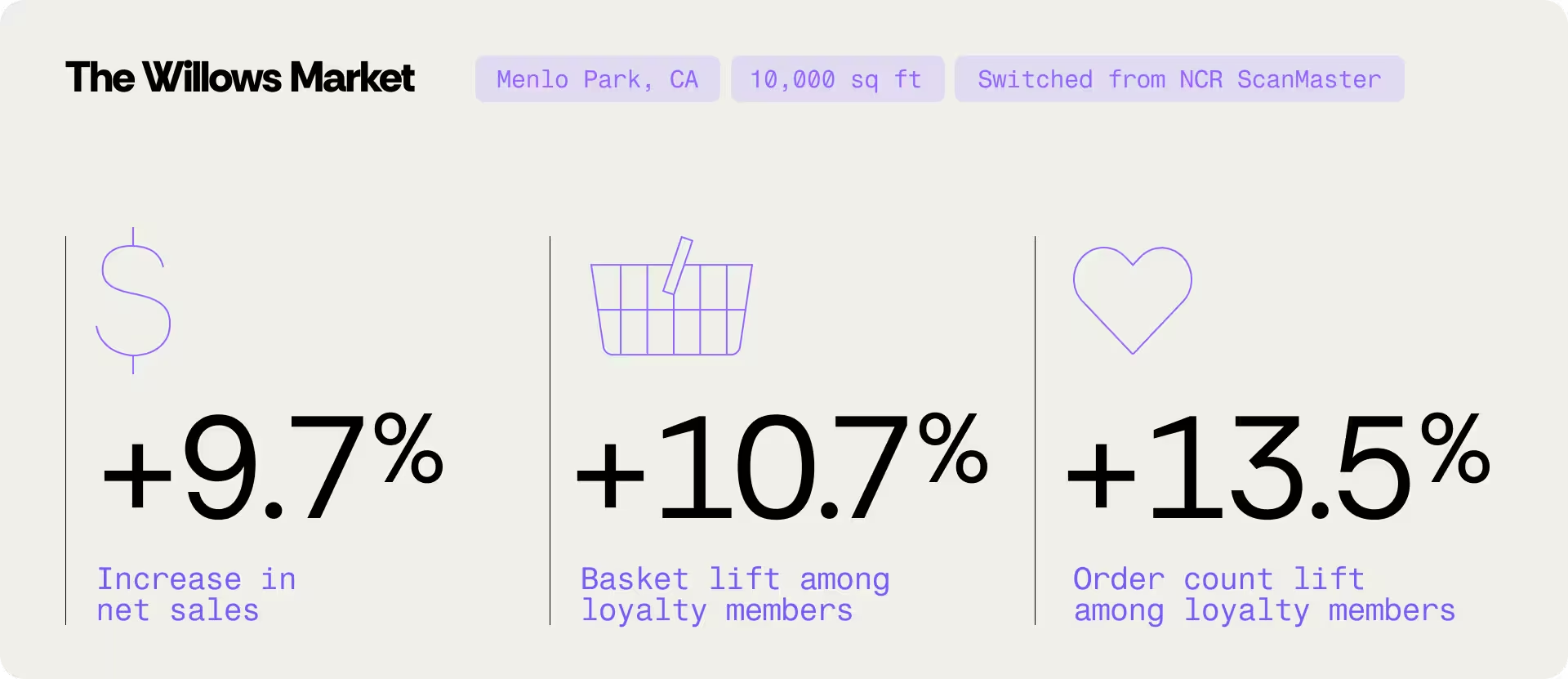
Nick has run The Willows Market in Menlo Park for nearly two decades. The store is known for its specialty wines, 1,000+ craft beers, and a brisket that locals talk about. But behind the scenes, pricing had become a liability.
"Protecting margin is the most basic function of a grocery store, and with Vori, it finally became simple."
Habit 3: Connect Ordering, Receiving, and Invoices
Why it matters
For most independent grocers, ordering, receiving, and invoicing are three separate workflows connected only by paper and memory. A buyer walks the floor with a clipboard and orders from experience. A delivery arrives and gets reconciled against a handwritten list. The invoice gets filed for someone to process later, often days after the products hit the shelf.
This is the DSD problem. Direct store delivery vendors are fast, frequent, and flexible. They also generate a lot of administrative complexity. When a chips vendor arrives at 8am during the morning rush with 40 SKUs, the chances of catching a quantity shortfall or a price increase in real time are low. By the time anyone has a moment to check, the driver is gone and the product is already on the shelf.
The cost isn't just the errors that do get caught. It's the hours spent on manual process that could go toward customers, ordering accuracy, and training. And it's the errors that never get caught at all.
The true cost of disconnected back-office work
Most owners don't track how many hours their team spends on manual ordering and receiving because it's always been part of the job. When you add it up, the picture changes:
What this looks like in a well-run store
Strong stores have connected these three workflows into a single flow. Here's what a typical delivery day looks like when it's working:
- The store team scans products on the floor using a mobile handheld. The system splits the order by vendor automatically and surfaces the last order quantities alongside 7 to 30 days of movement data. The order is grounded in real sales, not memory.
- When the delivery arrives, the receiver scans items against the purchase order. Quantity discrepancies are flagged in real time.
- When the invoice is processed, any cost differences versus the purchase order are automatically flagged and surface as pricing recommendations. The margin impact is visible instantly.
Hours come back every week. Errors get caught at time of receiving instead of days later. And the team stops spending Sunday afternoons on paperwork that could have been done Thursday morning.
Self-Assessment: Connected back office
- Do you know how many hours per week your team spends on manual ordering and receiving?
- When a vendor delivers fewer units than ordered, does your team catch it before the driver leaves?
- Are cost changes on invoices automatically compared to your current shelf prices?
- Is your ordering data based on actual item movement, or memory and experience?
- Can a receiver verify a full invoice in under five minutes?
In Practice: Digitized back office in New Mexico
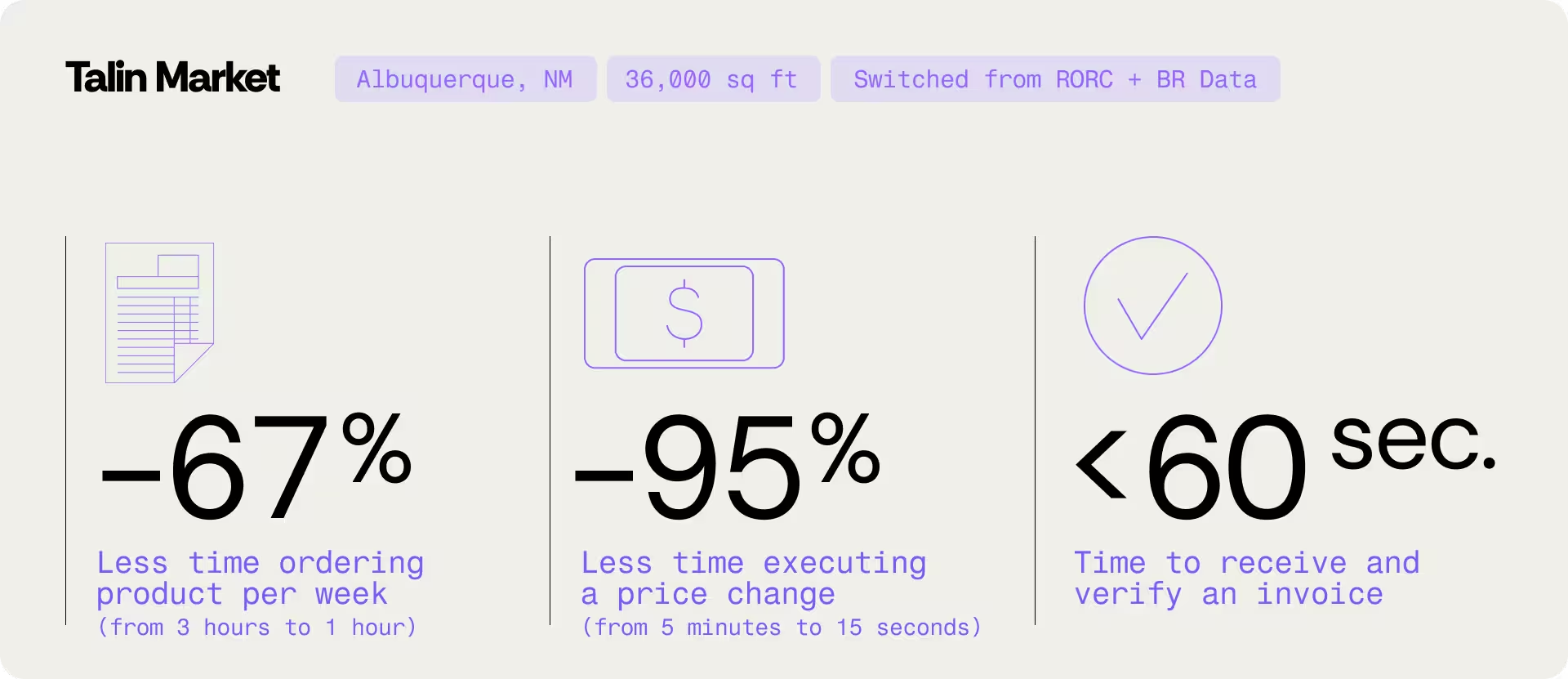
Talin Market in Albuquerque is a beloved international grocery destination. Operationally, the back office was running the way most independents run it: manually, and slower than it needed to be.
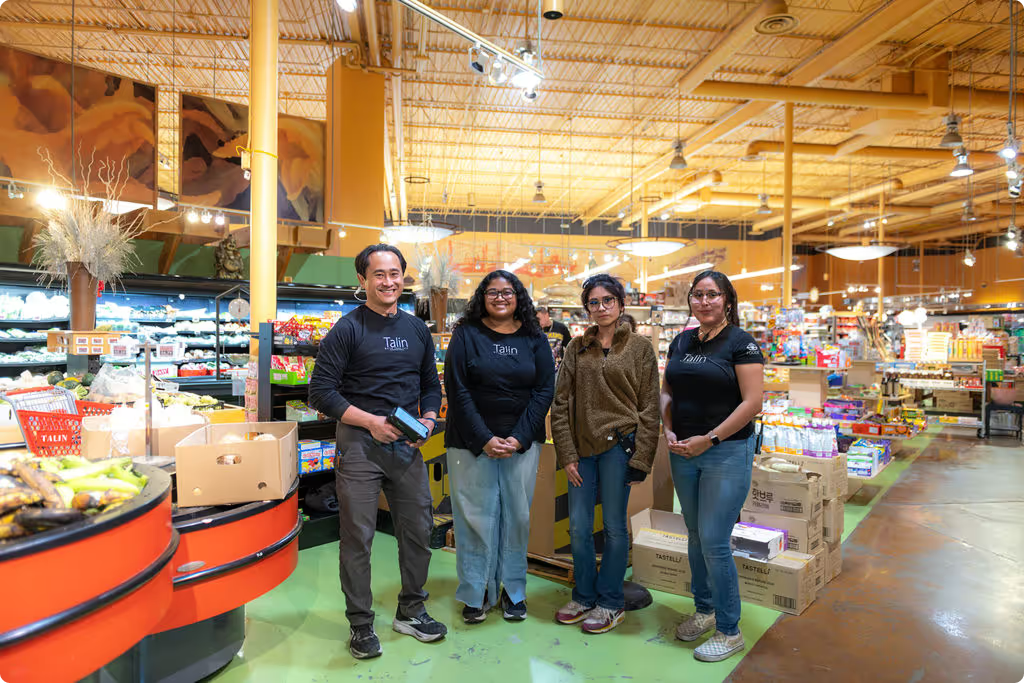
"I used to spend 2 or 3 hours just building a produce order. Now it can be done in under an hour, and it just works."
Habit 4: Build Loyalty That Actually Brings Customers Back
Why it matters
Every grocer knows loyal customers are worth more than occasional ones. A shopper who visits twice a week, even if they spend the same amount per trip, is more valuable than one who comes once. And a customer who chooses your store over a national chain for their weekly shop is a win that compounds over time.
The problem is that most independent grocers have tried to run loyalty programs with tools that weren't designed for them. Third-party apps disconnected from the POS. Manual punch cards. Blanket percentage-off promotions that apply whether the customer is a loyal regular or a first-time visitor. These approaches discount the people you already have without changing behavior.
Loyalty that works is simple for the customer to use, woven into the checkout flow so enrollment takes seconds, and connected to data that tells you which promotions are actually driving visits and which ones are just costing you margin.
The difference between loyalty that works and loyalty that doesn't
What this looks like in a well-run store
The stores running the most effective loyalty programs share a few consistent practices:
- Cashiers prompt every transaction for a phone number. Enrollment takes under 30 seconds. There's no complex sign-up page and no app required.
- The program carries the store's name, not a third-party brand. The relationship is between your store and your customer.
- SMS campaigns are timed to drive a specific action: a double-point weekend, a flash sale on produce, a personalized offer for a customer who hasn't visited in 30 days.
- Member versus non-member basket data is tracked and reviewed. Promotions get adjusted based on what's actually changing behavior.
- Rules-based promotions (BOGO, mix-and-match, spend thresholds, double-point days) target specific behaviors rather than discounting everyone across the board.
The result isn't just more loyalty sign-ups. It's bigger baskets, more frequent visits, and the ability to re-engage customers who've quietly drifted away.
Self-Assessment: Loyalty that brings customers back
- Can a cashier enroll a customer in your loyalty program in under 60 seconds?
- Do you know the average basket size of a loyalty member versus a non-member?
- Are your promotions targeted to specific behaviors, or do they apply to everyone?
- Do you use SMS to drive visits, not just announce sales?
- Can you identify customers who haven't visited in 30 or more days and reach them directly?
In Practice: Valley Farm Market
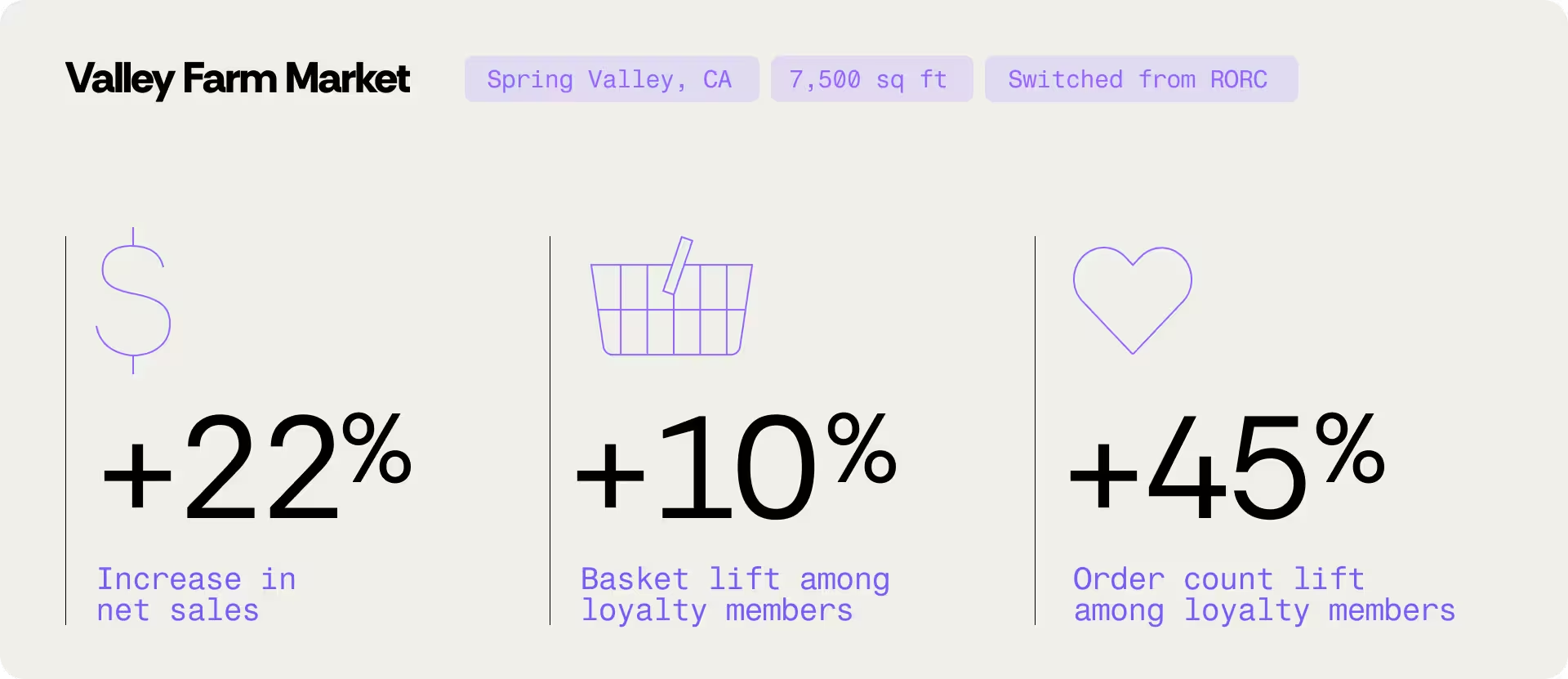
Derek at Valley Farm Market built a loyalty program that shoppers talk about. Customers are saving points, tracking balances, and choosing to come back specifically to use their rewards.
"People are excited. I ask 'Do you want to use your points?' and they say 'Nope, I am going to save those.' I am just excited that they are excited to come back and spend more money."
Recap: Strong Stores Win by Fixing the Right Things
You don't need a full overhaul. You need traction in the places that matter most.
The four habits in this playbook aren't complicated, but they do require the right foundation underneath them. A system that makes pricing changes take 30 minutes creates a different store than one that makes them take five seconds. A loyalty program disconnected from the POS creates a different outcome than one built into checkout. The habits are the same. What makes them stick is whether the tools support them or fight against them.
The Playbook at a Glance
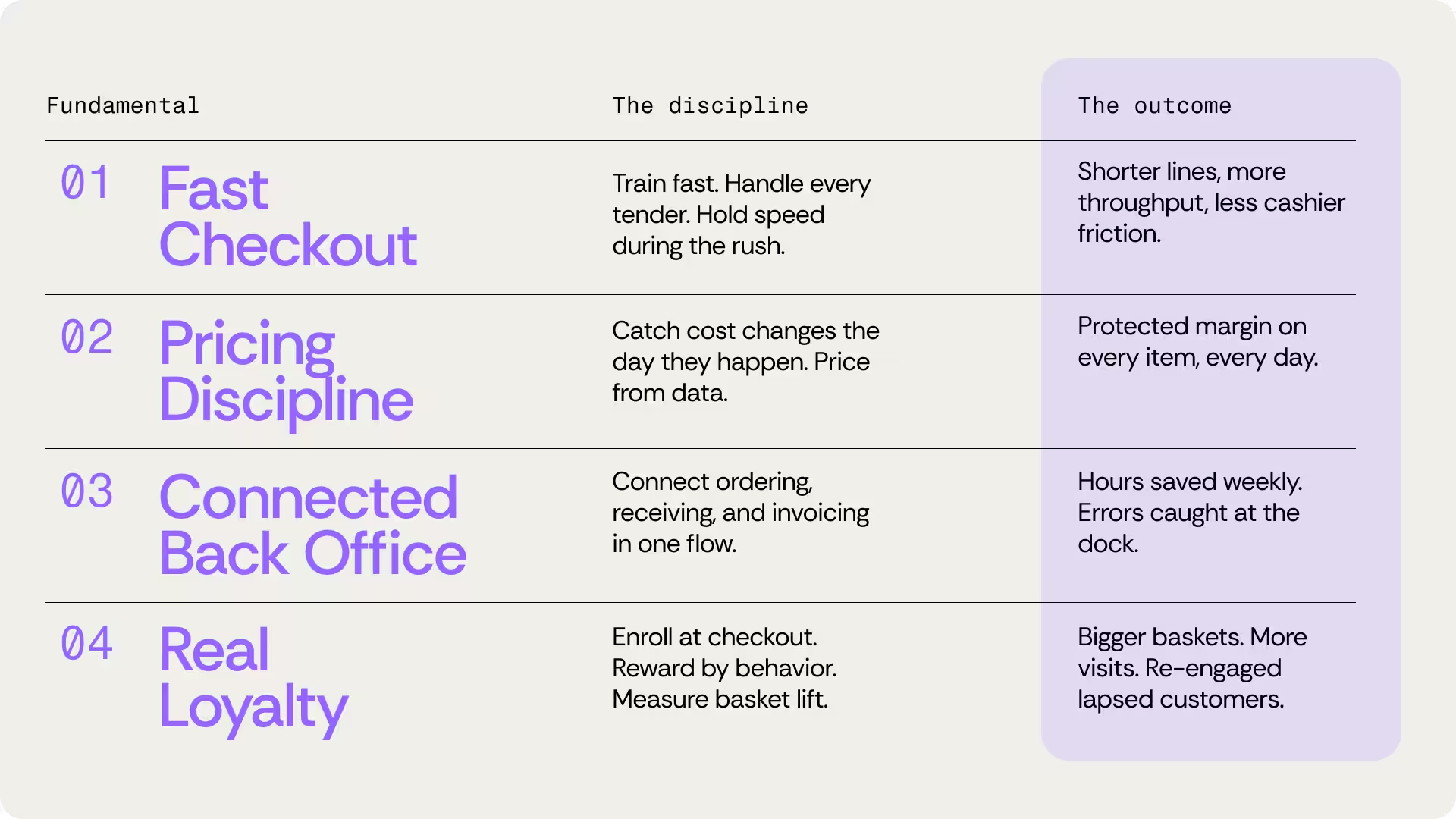
Five things to do this week
- Pull your four fundamentals. Gross margin, labor percentage of sales, sales per labor dollar, and market share. If they're hard to find, that's the first problem worth solving.
- Time your cashier training. How long before a new hire processes a solo transaction confidently? If it's more than two hours, the system is slowing you down.
- Audit five invoices from this week. Compare what you paid to what your current shelf prices reflect. The gap you find is active margin leakage.
- Time your produce order process. How long from start to submission? Under an hour is achievable. If it's taking longer, your back-office workflow has room to improve.
- Pull member versus non-member basket data. If you have a loyalty program, this comparison tells you whether it's changing behavior or just discounting people who would have come anyway.
About Vori
The modern grocery operating system built for independent grocers who play to win.
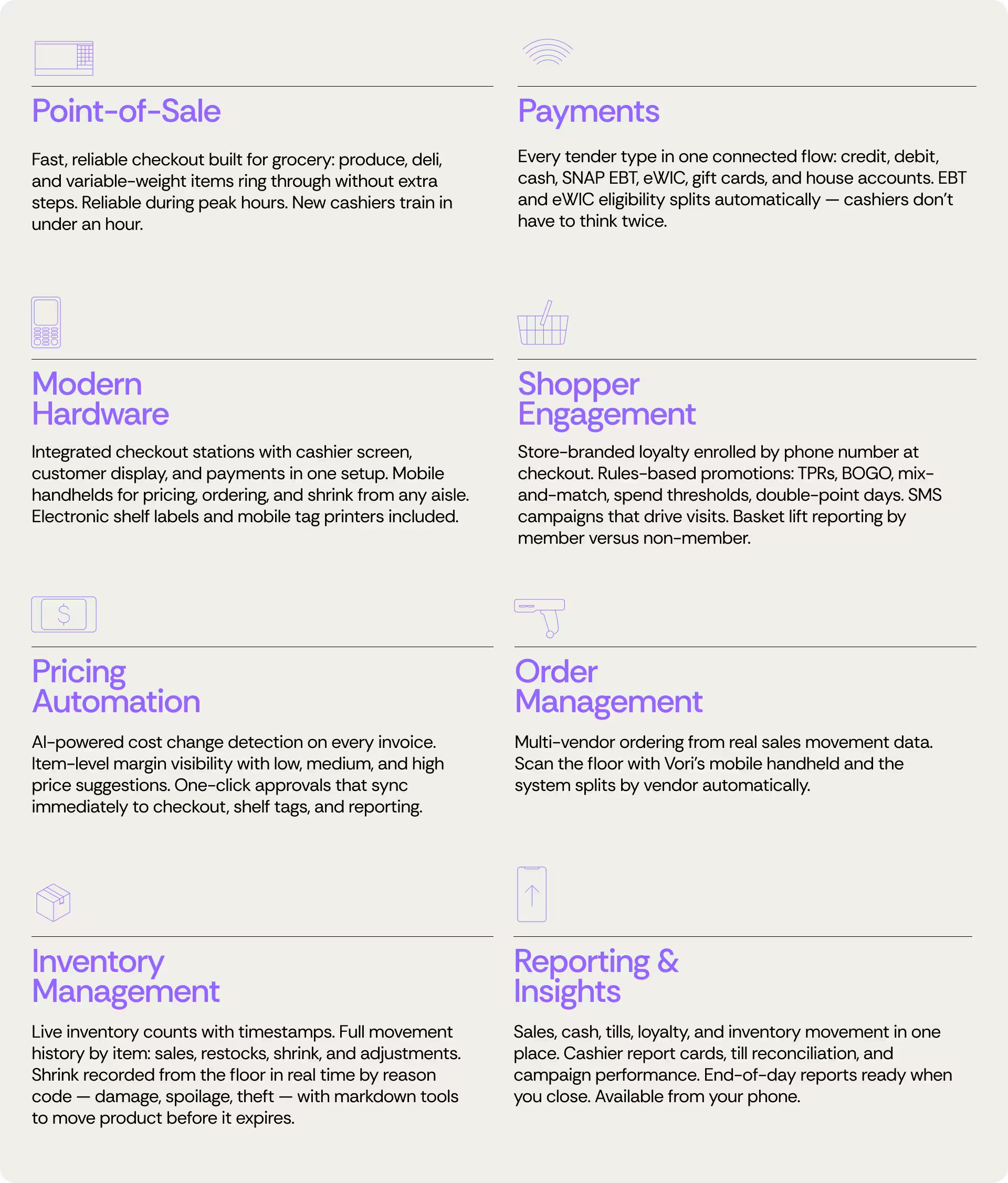
Vori brings checkout, loyalty, ordering, pricing, receiving, inventory, and reporting into one connected system built for how grocery actually works. Every feature was designed with 120 years of combined grocery experience on the team, deployed alongside operators who tested it on real store floors.
Independent grocers have been sold systems that weren't built for them for a long time. Restaurant software adapted for retail. Generic POS platforms missing DSD support, variable-weight items, and grocery-depth pricing tools. Legacy systems that were built when the industry was different and haven't kept up.
Vori was built from scratch for independent grocery. Not adapted. Not retrofitted. Built with the workflows, vendors, payment types, and operational realities that define how independent stores actually run.
What's in the system
FAQs
Everything you need to know about Vori. Can’t find the answer you’re looking for? Please chat to our friendly team.
You may also like
.jpeg)
AI in grocery: 70% are planning for it, 13% are using it
What 53 independent grocery operators told us about where AI should help, what's holding them back, and what the early adopters gained.
AI in grocery: 70% are planning for it, 13% are using it
What 53 independent grocery operators told us about where AI should help, what's holding them back, and what the early adopters gained.
Benchmark Report

Introducing Chip: the virtual employee built for independent grocers
Every Vori store now has a virtual employee. Chip plans promotions, catches cost changes, designs tags, and sets up your store.
Introducing Chip: the virtual employee built for independent grocers
Every Vori store now has a virtual employee. Chip plans promotions, catches cost changes, designs tags, and sets up your store.
Product Update