
How Independent Grocers Are Growing Wallet Share with Food Service Counters

Jesse Lopez
Head of Marketing
·
May 1, 2026
·
5
min read
More shoppers are choosing grocery stores for lunch and dinner.
What used to be a once-a-week stock-up trip is now a place to grab a hot meal, a sandwich, or a coffee on the way home. For independent grocers, this shift creates a real opportunity to grow wallet share without expanding square footage.
Food service is no longer just an add-on. For many stores, it is becoming a core revenue driver.
Shoppers Are Replacing Restaurant Meals with Grocery
Industry data shows a clear change in behavior.
According to FMI — The Food Industry Association's Power of Foodservice at Retail 2025 report, 28% of shoppers now purchase deli-prepared foods as a direct replacement for restaurant meals, more than double the 12% who said the same in 2017. A majority of shoppers purchase prepared foods from grocery stores at least monthly, with roughly one in four buying them weekly.
Value is the primary driver. FMI reports that 70% of consumers cite saving money compared to restaurants as a key reason for purchasing prepared foods from grocery stores. Shoppers also report that grocery prepared foods meet expectations for freshness and quality — meaning the trade-off from restaurants no longer feels like a compromise.
The scale of this shift is measurable. Retail foodservice sales reached $52.1 billion in 2025, up 1.6% year over year, according to NielsenIQ data cited by FMI. Prepared foods and meals now represent over half of all deli department sales — 55.8% — growing 5.6% in dollars through late 2024, according to Circana OmniMarket.
Younger households and working families are more likely to rely on grocery for ready-to-eat meals, reinforcing that this is becoming a routine behavior rather than an occasional convenience. Grocery stores are capturing a growing share of food dollars that historically went to restaurants — and the data suggests that trend is accelerating.
Why Food Service Matters Financially
For independent grocers operating on tight margins, food service changes the math of the store.
Prepared foods and deli departments typically generate higher gross margins than many center-store categories. Industry reporting consistently places prepared food gross margins in the 40-60% range, depending on format and execution. That margin profile alone makes food service one of the most profitable areas inside the store.
Food service also increases basket size. When a shopper comes in for a sandwich or hot meal, they often add drinks, snacks, or items for later. These hybrid trips drive incremental revenue beyond the counter itself.
Finally, food service creates new traffic occasions. Instead of relying solely on the weekly grocery trip, stores capture lunch and early dinner visits. That increases frequency and keeps the store relevant throughout the week.
For independent operators, these three factors—margin mix, basket growth, and trip frequency—directly impact profitability.
The Operational Challenge
Demand is growing, but execution is where many stores struggle.
Most grocery store POS systems were not built to handle made-to-order workflows. Adding modifiers like extra cheese or no onions can slow down checkout. Kitchen communication often relies on handwritten notes or workarounds. Some stores use separate tools for food service, which creates reporting gaps and adds complexity.
When food service runs outside your grocery POS, it creates operational headaches:
- Slower transactions at the counter and at checkout
- Order details lost or miscommunicated between register and kitchen
- Separate reports that need to be reconciled at the end of the day
- Staff switching between multiple tools to complete one sale
For independent grocers with lean teams, added complexity quickly becomes added labor.
Capture More Wallet Share with Vori's Deli POS System
Vori's deli POS system is designed to support common grocery counter formats — deli counters, coffee bars, taquerias, and smoothie stations — without requiring a separate restaurant system.
Here is how it works in practice.
1. Build Menu Items Faster with AI Menu Builder
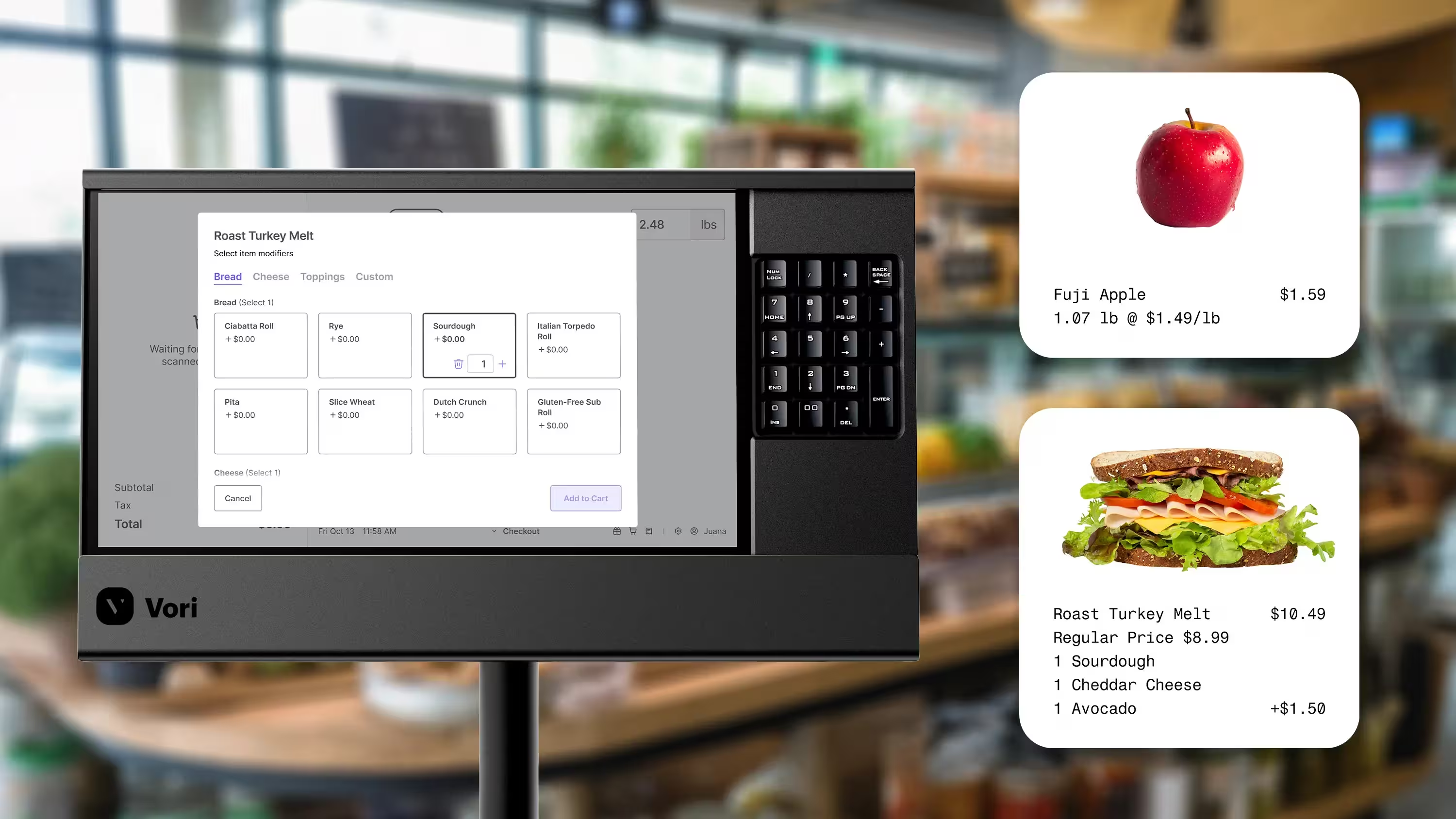
Setting up menu items can be time-consuming, especially when each item requires the right modifier groups and structure. With AI Menu Builder, you can describe the menu item you want to offer and provide context about available modifiers. Vori recommends a menu item structure and modifier groups based on your prompt. You can review the suggested setup, adjust modifiers or pricing, and add the item to your menu.
2. Ring Food Service Cleanly at the Counter
At the register, your cashiers are guided through a structured workflow to confirm selections before the item is added to the cart. Modifiers can be added, removed, or adjusted for quantity.
3. Send Tickets Straight to Prep
Orders print as clean, formatted kitchen tickets with clearly listed items and modifiers. Your prep team receives clear instructions without handwritten notes or verbal back-and-forth.
4. Handle Hybrid Carts with Ease
Made-to-order deli items and grocery products live in the same basket. A customer can order at the deli, continue shopping, and check out once.
5. Keep Lines Moving from One POS
Counter orders can be suspended and resumed. Your staff can send items to the kitchen while the customer shops, then complete payment at any register.
6. Unify Food Service and Grocery Reporting
Prepared food sales, taxes, and payments are reflected in the same reporting system as the rest of your store. You do not need to reconcile a separate tool at the end of the day.
A Practical Growth Lever for Independent Grocers
Industry data makes one thing clear: grocery stores are competing more directly with restaurants for meal occasions — and the best POS for deli and food service counters is the one that's already built into your grocery system.
The opportunity is measurable. Higher-margin prepared foods, more frequent trips, and larger baskets directly affect profitability.
For independent grocers, the key is execution. Food service needs to integrate cleanly into checkout, kitchen workflows, and reporting. When it does, the counter becomes more than a convenience. It becomes a meaningful contributor to store performance.
You may also like
POS, Pricing, Inventory, Loyalty: Why Your Grocery Tools Need to Share the Same Data
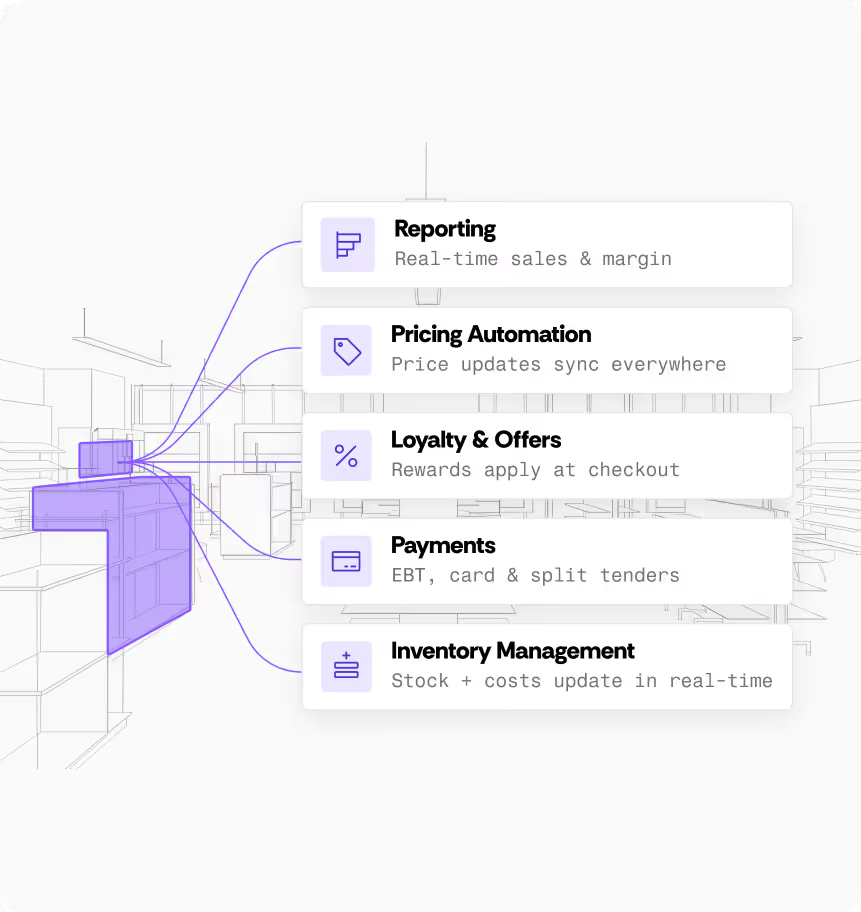
Learn why the problem isn't your grocery tools but the gaps between them. When POS, pricing, inventory, and loyalty don't share data, you lose margin you can't see. Here's what connecting them changes.
POS, Pricing, Inventory, Loyalty: Why Your Grocery Tools Need to Share the Same Data
Learn why the problem isn't your grocery tools but the gaps between them. When POS, pricing, inventory, and loyalty don't share data, you lose margin you can't see. Here's what connecting them changes.
Explained
The Complete Guide to Grocery Store Management Software in 2026 (Features That Actually Matter)
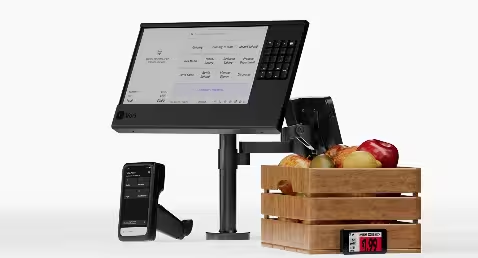
Most grocery store management software is built for general retail, not grocery. Here are the capabilities that actually matter for independent stores, and why they only pay off when they connect.
The Complete Guide to Grocery Store Management Software in 2026 (Features That Actually Matter)
Most grocery store management software is built for general retail, not grocery. Here are the capabilities that actually matter for independent stores, and why they only pay off when they connect.
Buyer's Guide