
Grocery Inventory Management 101: Always Knowing What's in Stock Without Overordering

Jesse Lopez
Head of Marketing
·
July 1, 2026
·
5
min read
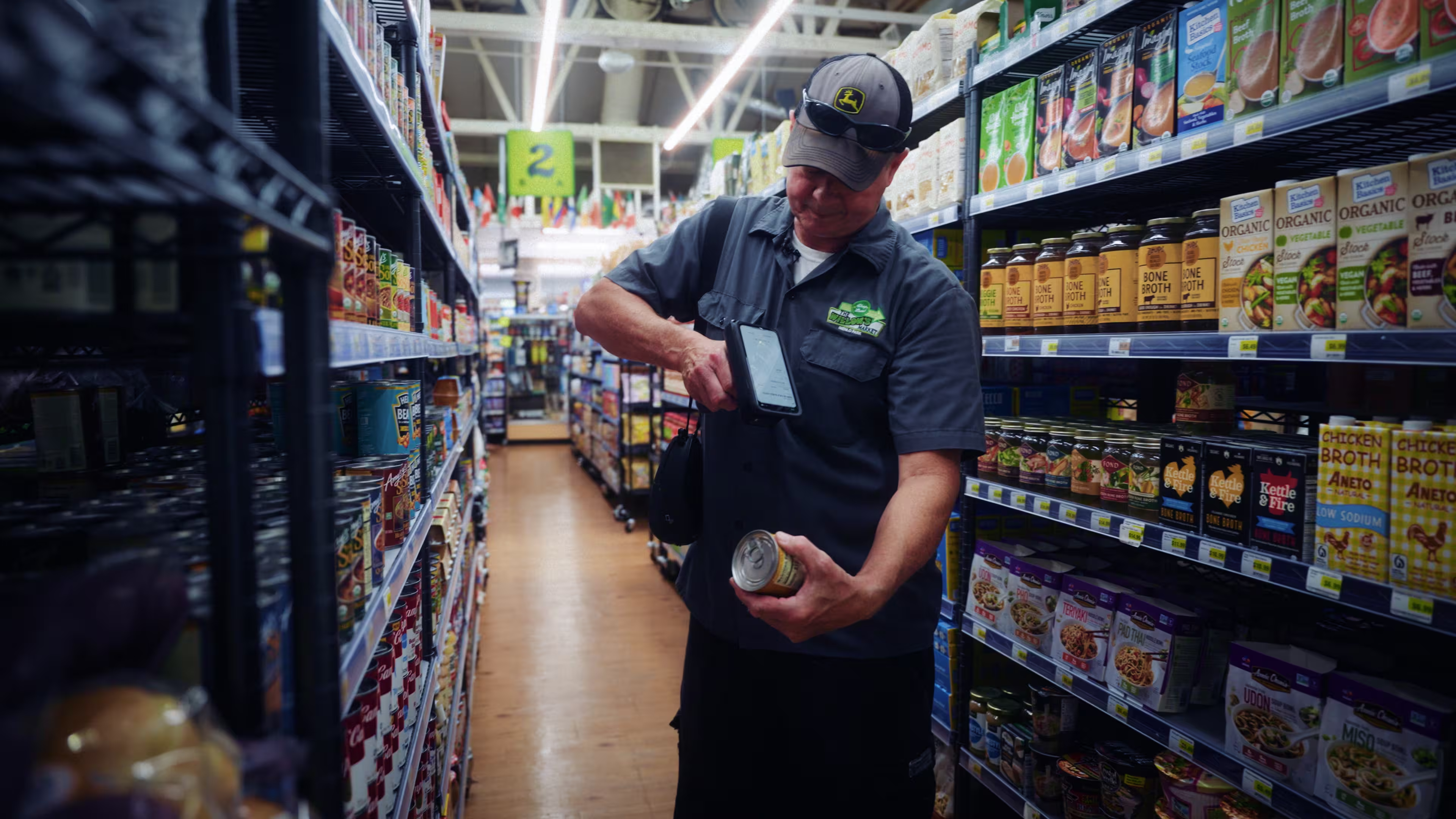
Most grocery stores run on inventory records that do not match what is actually on the shelf, and that gap quietly costs margin on both ends. Independent grocers operate at a 1.9% net margin with total expenses at 25.8% of sales, which leaves no room for invisible inventory losses. This guide covers five fundamentals: why inventory goes wrong, what it costs, how perpetual systems fix it, how movement data drives smarter ordering, and how inventory accuracy and shrink are really one problem.
Why Most Independent Stores Do Not Know What Is on Their Shelves
Inventory record inaccuracy in grocery is not an edge case. ECR Community research shows roughly 60% of SKU-level inventory records are inaccurate at any given time, and records begin to deteriorate the moment a physical count ends. Four things drive that drift. Receiving errors enter the wrong quantity or cost. Shrink from theft, damage, and spoilage goes unlogged. Manual counts get miscounted. And movement events like transfers, markdowns, and write-offs never make it into the system at all.
Scale makes it worse. A store carrying 10,000 to 40,000 SKUs across perishable and shelf-stable categories has more daily movement than any periodic count can keep up with. The systems meant to track it often are not connected. In the 2026 Independent Grocery Operator Study, commissioned by Vori, one-third of independent grocers said their point of sale is only somewhat or not well integrated with their other tools, and another third said they run no back office software at all. That is how the gap forms. IHL Group found that fewer than one in four major U.S. retailers hit 80% or better on shelf execution, including on-shelf availability.
What Inventory Inaccuracy Costs Independent Grocers
Inventory distortion, the combined cost of out-of-stocks and overstock, runs an estimated 6.5% of global retail sales, or roughly $1.77 trillion a year according to IHL Group. Both failure modes hurt. An out-of-stock costs you the sale and often the customer. Research from the Food Marketing Institute (FMI), the food retail trade association, and NielsenIQ, the consumer intelligence company, shows more than 90% of shoppers now shop both online and in store, so they switch stores fast when an item is missing. Overstock costs you the other way, through markdowns and spoilage.
Grocers know where the pressure is. In the 2026 Independent Grocery Operator Study, inventory management ranked among the top concerns for the year ahead, and 13% named it their single biggest challenge. ECR Community found that correcting inaccurate records lifted sales by 4% to 8% on average, simply because product was reliably on the shelf. At a 1.9% net margin, a sales gain like that is not a rounding error. It is the difference between a good year and a flat one.
The Fix: Why Perpetual Inventory Systems Outperform Periodic Counting
A perpetual inventory system, one that updates counts with every movement, stays more accurate than a periodic system that only corrects records during an occasional full count. In a periodic setup, your records are right for a moment after the stocktake and then drift. Between counts, shrink, receiving errors, and unlogged adjustments pile up where you cannot see them. ECR Community treats physical counts as a way to validate perpetual records, not replace them. Their accuracy framework compares the perpetual file against physical counts and finds records deteriorate right after each stocktake when movement is not captured correctly.
This is also where ordering breaks. NACDS guidance from the National Association of Chain Drug Stores treats accurate perpetual inventory and clean product data as the foundation for on-shelf availability. When the perpetual file is wrong, replenishment logic fails. The system orders the wrong amounts because it does not know what is actually on the shelf. You end up short on the items that sell and long on the ones that sit, all from the same bad data.
PAR Level Ordering: How Movement Data Replaces Gut Instinct
PAR level ordering is a method where you set a target on-hand quantity for each item based on how it actually sells, then order the difference between that target and what is on the shelf. In operations management, a PAR level is a periodic review policy: you set an order-up-to point using demand history and vendor lead times, and each review brings stock back up to that level. It is a universal inventory concept, and it applies cleanly to grocery.
Movement data is the input that makes it work. A PAR level built on real sales velocity over the last 14 to 30 days accounts for seasonal swings, promotion bumps, and category trends in a way that habit and gut feel never can. Get it wrong in the other direction and the cost shows up fast. When PAR levels are set too high because movement data is missing or stale, you hold excess stock that ties up cash and pushes spoilage in perishable departments. Grocers want this fixed. In the 2026 Independent Grocery Operator Study, inventory management was the top area where independent grocers said they need more technology, with owners specifically asking for automated restocking and replenishment.
Why Inventory Accuracy and Shrink Are the Same Problem
Shrink is calculated from the gap between your records and your physical count, which means poor inventory accuracy and poor shrink measurement are the same problem seen from two sides. ECR Community defines shrink, or unknown loss, as the negative difference between the perpetual record and the physical count over a period, shown as a percentage of sales. In grocery, shrink typically runs 1% to 3% of sales. When the perpetual record is wrong, that number is contaminated. You cannot tell real product loss from a counting mistake or a receiving error.
That is a diagnostic problem, not just an accounting one. ECR identifies both negative discrepancies, where the system shows more than exists and creates phantom shrink and stockouts, and positive discrepancies, where the system shows less than exists and hides overstock that ties up cash. Either way, you cannot trace a loss back to theft, spoilage, or a vendor error. Grocers feel this load. In the 2026 Independent Grocery Operator Study, 58% of independent grocers said shrink and waste tracking is a capability they need to sharpen to compete.
How Vori Keeps Store Inventory in Sync All Day
Vori connects counting, ordering, receiving, and shrink tracking in one system, so your inventory updates throughout the day instead of waiting for the next stocktake. As items sell at the register, Vori adjusts the count. As invoices arrive at the back office, it updates them there. As staff log damage or spoilage on the floor with reason codes, that flows in too. The result is a live count for any item and a full movement history, no manual count required. This is a perpetual inventory system working the way it should, in a real store, all day.
Ordering runs on that same live data. Vori generates orders from PAR levels and actual sales movement, so shelves stay stocked without constant counting. Receiving stays clean because Vori flags cost changes and new items as invoices come in, updates quantities as your team approves them, and keeps inventory, pricing, and reporting aligned automatically. That connection is why the time savings are real.
Because Vori digitizes receiving and replenishment instead of leaving them to manual work, Talin Market cut its weekly ordering time by 67%. That demand is widespread. In the 2026 Independent Grocery Operator Study, 60% of independent grocers said inventory management would benefit most from AI and automation. Yet adoption is still early across the board: just 13% of independent grocers are using AI or automation tools in their store today, with most still planning or exploring. Vori closes that gap. See how Vori keeps your counts accurate and your ordering sharp. Book a demo.
FAQs
Everything you need to know about Vori. Can’t find the answer you’re looking for? Please chat to our friendly team.
You may also like
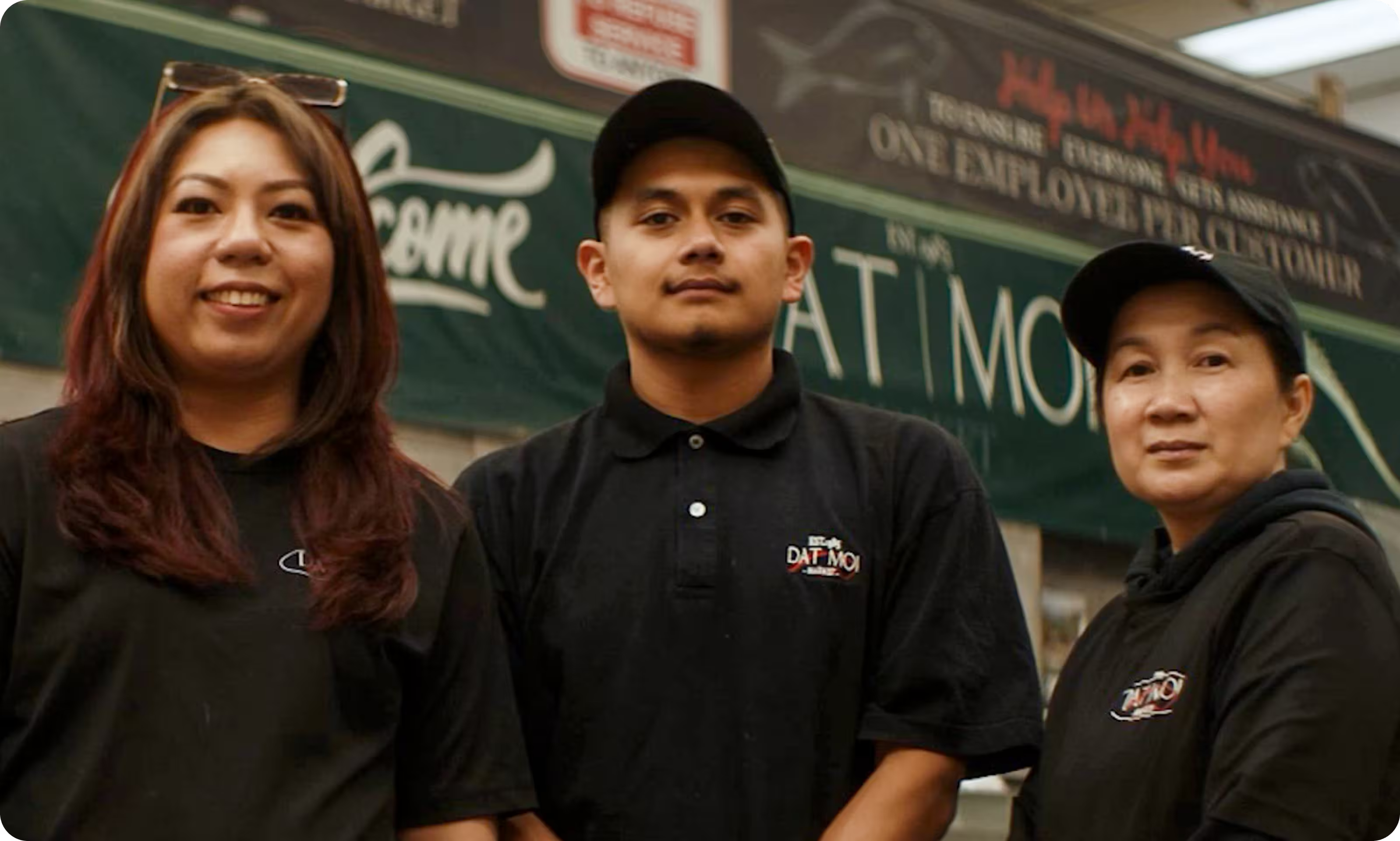
POS, Pricing, Inventory, Loyalty: Why Your Grocery Tools Need to Share the Same Data
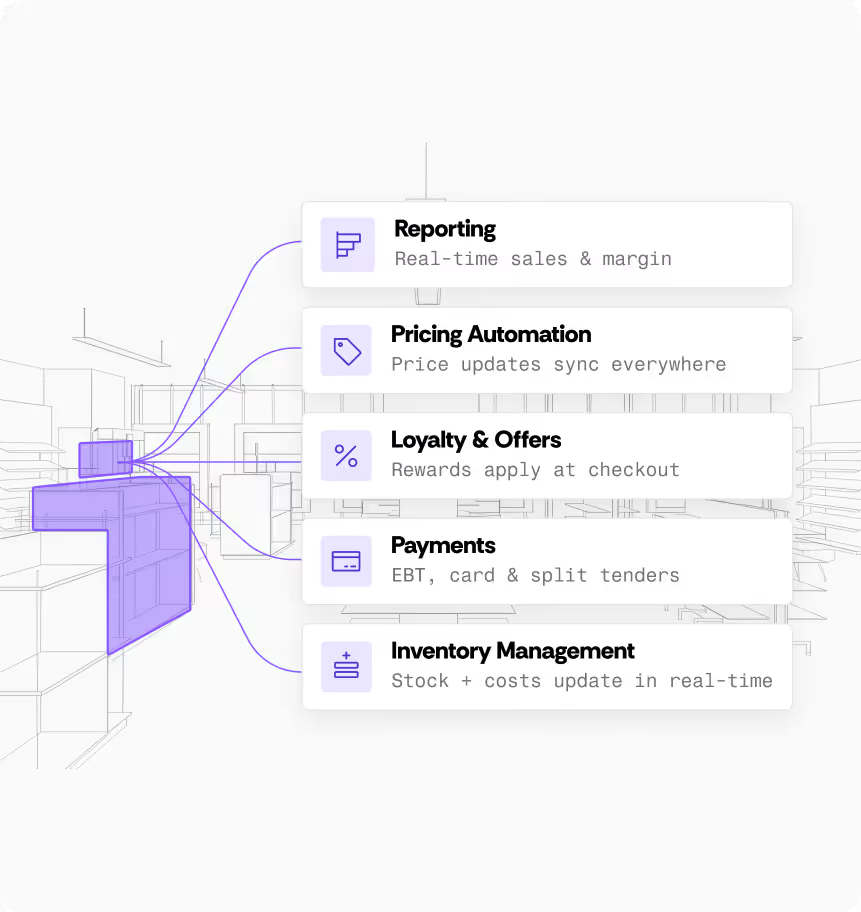
Learn why the problem isn't your grocery tools but the gaps between them. When POS, pricing, inventory, and loyalty don't share data, you lose margin you can't see. Here's what connecting them changes.
POS, Pricing, Inventory, Loyalty: Why Your Grocery Tools Need to Share the Same Data
Learn why the problem isn't your grocery tools but the gaps between them. When POS, pricing, inventory, and loyalty don't share data, you lose margin you can't see. Here's what connecting them changes.
Explained
The Complete Guide to Grocery Store Management Software in 2026 (Features That Actually Matter)
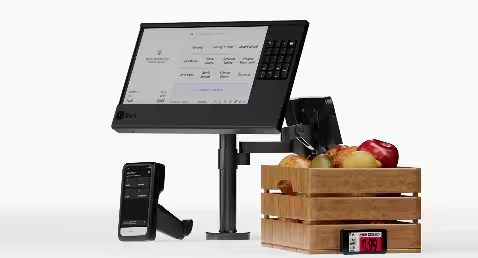
Most grocery store management software is built for general retail, not grocery. Here are the capabilities that actually matter for independent stores, and why they only pay off when they connect.
The Complete Guide to Grocery Store Management Software in 2026 (Features That Actually Matter)
Most grocery store management software is built for general retail, not grocery. Here are the capabilities that actually matter for independent stores, and why they only pay off when they connect.
Buyer's Guide