
Grocery Store Loyalty Programs: How Technology Boosts Customer Retention

Jesse Lopez
Head of Marketing
·
June 30, 2026
·
8
min read

Your best customers are not loyal by accident. They come back because your store keeps giving them a reason to. That reason is harder to earn than it used to be. The average shopper now spreads their grocery spending across several stores, weighing your prices and your produce against the chain down the road and the app on their phone. FMI's U.S. Grocery Shopper Trends 2026 report found that households now visit 5.4 different grocery banners a month, and younger shoppers spread even wider, at 6.7 banners for Gen Z and 6.1 for Millennials. You are not just competing with the market across town. You are competing with national chains, big-box retailers, and online delivery for every trip.
For a long time, grocery store loyalty programs meant a punch card that lived in a junk drawer and a coupon binder nobody kept current. Those tools were easy to lose and told you almost nothing about who was actually shopping with you. Grocery loyalty technology changed that. When loyalty and SMS marketing live inside your point of sale, you can reward the people already walking your aisles, reach them directly, and turn one good trip into a standing habit.
Vori builds loyalty and shopper messaging right into the register, so independent grocers can compete on relationships, not price alone. This guide shows how technology powered loyalty programs lift retention, grow basket sizes, and help your store hold its ground against bigger players.
Why Customer Retention Matters More Than Acquisition for Grocery Stores
Keeping a customer costs far less than chasing a new one. Harvard Business Review reports that acquiring a new customer runs five to twenty-five times the cost of holding onto one you already have, and that lifting retention by just 5% can grow profits anywhere from 25% to 95%, drawing on research by Frederick Reichheld of Bain & Company. Every dollar you pour into ads and discounts to win a first visit is a dollar you are not spending on the people who already trust your store. On grocery margins, that gap adds up fast.
Loyal shoppers also behave differently from one-time visitors. They shop more often, spend more per trip, and give you a bigger share of their weekly grocery budget. Repeat customers spend roughly 67% more than first-timers. Because your margins are thin, even a small lift in repeat visits moves real money to your bottom line. That is the whole case for a strong customer retention grocery strategy: protect the relationships you already have, then grow them.
The numbers from real stores back it up. The Market at Edgewood, a six-lane neighborhood market in Palo Alto, had no built-in way to run loyalty on its old NCR system. After switching to Vori, the store launched a loyalty program with automated SMS campaigns and targeted offers built on shopper data, and the results showed up fast. Within five months, that program drove a 23% lift in net sales. Because the rewards gave members a reason to return and spend more, loyalty shoppers visited 37% more often and spent 14% more per basket than non-members, a difference of about $20 a trip. The targeted come-back messaging did its own work too: 28% of those loyalty sales came from re-engaging shoppers the store had lost. None of that happened by chance. It happened because the tools to reward, message, and track shoppers finally lived in one place.
Essential Features of Modern Grocery Store Loyalty Programs
A loyalty program works when its parts work together. Enrollment, rewards, messaging, and shopper data should live in one place, not scattered across a card reader, a separate app, and a marketing tool you bolt on later. When they connect, every checkout teaches you something about your customer.
With Vori, loyalty sign-up, marketing opt-in, and reward redemption all happen at the register with a mobile phone number. The moment a shopper joins, the system starts building a digital profile: how often they visit, how much they spend, which products they reach for, and which offers bring them back. You are not guessing anymore. You are watching real behavior, customer by customer.
That centralized record is what separates modern grocery customer engagement from the old punch-card approach. Loyalty is already common ground for the segment. Based on the 2026 Independent Grocery Operator Study, commissioned by Vori and conducted by EnsembleIQ Insights & Innovation in partnership with Progressive Grocer, more than two-thirds of independent grocers already run a loyalty program, and another 8.0% plan to add one. The edge no longer comes from having a program. It comes from putting the program's data to work, which is exactly what a connected system lets you do.
POS Integrated Enrollment and Reward Redemption
The fastest way to kill a loyalty program is to make signing up a chore. Separate apps, plastic cards, and long registration forms give shoppers an easy excuse to skip it, and most do.
Vori removes the excuse. Your cashier enrolls a shopper right at the lane using a phone number, in the middle of a checkout the customer is already completing. There is no app to download and no card to carry. Rewards redeem the same way, with nothing to fumble for at the register.
Because it happens naturally during a transaction, loyalty program enrollment climbs. You capture more shoppers, and you capture them without slowing the line. The same study found that half of operators with a loyalty program already use a phone number or email as the shopper's identifier at checkout. Vori makes that the default and ties it straight to your rewards, so the sign-up that already fits your workflow becomes the front door to everything else.
Flexible Reward Structures That Drive Behavior
No two grocery stores share the same shoppers, so no single reward structure fits every store. Some customers chase points. Others want an instant discount or a deal on the product they buy every week. The right program lets you test until you find what moves your aisles.
Vori Shopper Engagement gives you room to build the promotions that fit your store. Run points per dollar. Set up digital punch cards on a specific product, like buy ten coffees and get one free. Layer in mix-and-match deals, spend-based offers, BOGO promotions, category discounts, and product-specific rewards that apply automatically at checkout.
That flexibility does real work. You can spotlight a slow-moving department, pull traffic on a quiet weekday, or grow baskets around prepared foods. Start with a proven template, watch what your shoppers respond to, and adjust. The program bends to your store, not the other way around.
Personalized SMS Marketing That Feels Like Communication Not Spam
A loyalty program is only as good as your ability to reach the people in it. Weekly circulars and email newsletters help, but they sit in a stack or an inbox until someone gets around to them. Most never do.
SMS marketing grocery campaigns land differently. Text messages see open rates near 98%, far above the roughly 20% most email earns, and most texts get read within minutes. That makes texting the strongest channel you have for a time-sensitive deal or a fresh delivery you need to move today. Independent grocers already know it. In the same operator study, SMS messaging tied for the most common loyalty feature, used by 72% of grocers who run a program, and targeted shopper messaging ranked as the single capability operators most want to improve to compete.
Vori puts that channel in your hands without a marketing team. You can send your first message in five minutes, no experience required. Give shoppers a heads-up on a new item in stock, an invite to a Friday wine tasting, or this week's deals. Write it in your store's own voice, the way you would talk to a regular at the counter. Coming from a trusted local store, those texts read like a helpful update, not a sales blast.
Automated Campaign Templates for Quick Setup
You should not have to write a new text every week to stay in front of your shoppers. Automated marketing campaigns do the routine work for you, sending the right message when a customer hits a trigger.
Vori ships with templates built for grocery. A Welcome message goes out the moment a shopper signs up. Explore the Store sends personalized coupons through the year to nudge members toward products they have not tried, which grows the average basket. Come Back reaches a shopper with an offer after they have gone quiet for a set stretch of time. Anniversary thanks a member with a reward on the date they joined.
The Market at Edgewood leaned on these templates to keep steady contact with shoppers without adding a single task to the staff's day. The system watches behavior and sends on its own, so your team stays focused on the floor.
Custom Campaigns for Timely Promotions
Some of the best moments in a grocery store cannot wait for an automated schedule. A truck of local corn just landed. A weekend special needs a push before Saturday. For those, you need to move now.
Custom campaigns are one-time texts you write and schedule yourself. When something good shows up at receiving or you want to drive traffic on a slow afternoon, you send a message straight to your shoppers and watch the door. The Market at Edgewood used custom texts to promote seasonal deals and one-off rewards tied to what was fresh that week.
Run the two together and you get the best of both. Automated campaigns keep you consistent in the background. Custom campaigns let you react the second an opportunity walks through the back door.
Using Customer Data to Build Stronger Relationships
Every loyalty checkout hands you information you used to lose. With Vori, each transaction feeds a centralized shopper profile, building a clear picture of how often a customer visits, what they spend, the products they favor, and the offers that pull them back in.
That visibility is the difference between selling to strangers and serving people you know. Legacy systems leave you flying blind on shopper behavior. A modern platform turns the same checkout data into relationship intelligence you can act on, which is exactly where most operators say they want to be. In the 2026 Independent Grocery Operator Study, just 66.0% of grocers with a loyalty program felt they were leveraging their loyalty data effectively to grow the business, even though 94.0% found their program easy for customers to use. The gap is not the program. It is the data sitting unused.
Tracking Shopping Patterns and Purchase Behavior
Patterns show up fast when every trip is recorded. Over a few weeks, you can see who shops weekly, which categories a customer leans on, and how buying shifts with the seasons. A produce-driven shopper looks nothing like a prepared-foods regular, and now you can tell them apart.
That picture tells you who your most valuable shoppers are and what actually earns their next trip. You might find one group responds to fresh produce deals while another only moves on prepared-food discounts. Personalized rewards built on real purchase history consistently outperform generic offers, because they speak to what a shopper already buys instead of what you hope they will.
Segmentation for Targeted Promotions
The same offer rarely fits every shopper, so stop sending it to everyone. Segmentation lets you group customers by spending, visit frequency, or product preference, then send each group an offer that actually fits.
Reward your high spenders with exclusive perks or early access. Send a comeback coupon to a shopper who has not been in for a few weeks. Nudge a newer customer toward a department they have never tried. Each message lands as something useful, not noise, and that is what keeps people opted in. Behavioral segmentation is the foundation of personalized rewards that grow loyalty instead of wearing it out.
Speed and Simplicity That Gets You Live Fast
Most legacy grocery systems never gave you a built-in way to run loyalty at all. Without one, you either pay for a separate platform, stitch together a workaround, or skip rewards entirely. That means leaving your most loyal shoppers unrewarded and your newest ones unengaged, which is the opposite of what your store needs.
Vori closes that gap with turnkey shopper engagement tools that come ready to run. There is no months-long install and no consultant required. The Market at Edgewood switched from NCR to Vori across every lane in under six hours, without closing the store. Stores go live in days, not months, and start enrolling shoppers the moment the system is on. You spend your time serving customers, not waiting on software.
Compete with Big Box Stores by Building Community
You will not out-spend Walmart or out-scale Amazon, and you do not have to. Independent grocers win on the things the giants cannot fake: personal service, local products, and a real connection to the neighborhood. In the same operator study, grocers named customer experience as the number one way to win against big-box stores, and more than half pointed to their loyalty and rewards program as a key strength they use to compete.
Loyalty technology makes those strengths louder. Instead of treating shoppers as anonymous transactions, you reward the regulars by name, send offers that fit how they actually shop, and stay in touch between trips. Vori's flexible rewards let you track points and offer perks that build bigger, more frequent baskets, all in your store's own voice.
You do more than sell groceries. You feed a community, and a loyalty program is how you give that community a reason to choose you every single week. That personal pull is something no national chain can copy.
Launch Your Loyalty Program and Grow Sales with Vori
Vori brings POS, payment processing, shopper engagement, order management, pricing automation, and reporting together in one connected platform. Loyalty is not a bolt-on. It runs on the same system as your checkout, so your rewards and your register always agree.
The results show up on the P&L. The Market at Edgewood took over a store that was losing money, switched from NCR to Vori, and used the connected platform to fix pricing, tighten margins, and launch loyalty at the same time. Within two months, the store reversed its sales slide and grew monthly revenue by $110,000 over the prior year. Its Vori loyalty program drove a 23% lift in net sales within five months, and the pricing and cost-change tools lifted gross margins by 7%.
Valley Farm Market saw the same pattern. After moving loyalty onto Vori, the Spring Valley store enrolled more than 10,000 shoppers in rewards, lifted net sales 22% and baskets 10% among loyalty members, and saved over 20 hours a week it used to spend on manual work. The clearest proof is in how shoppers treat their points.

"When I ask them, 'do you want to use your points?', they say, 'Nope, I am going to save those.' And I am just excited that they are excited to come back and spend more money."
Those gains trace back to one decision: putting the whole store on one system. You can launch faster than you think, engage shoppers from day one, and watch the basket sizes follow. See how Vori helps you build loyalty that grows sales. Book a demo.
FAQs
Everything you need to know about Vori. Can’t find the answer you’re looking for? Please chat to our friendly team.
You may also like
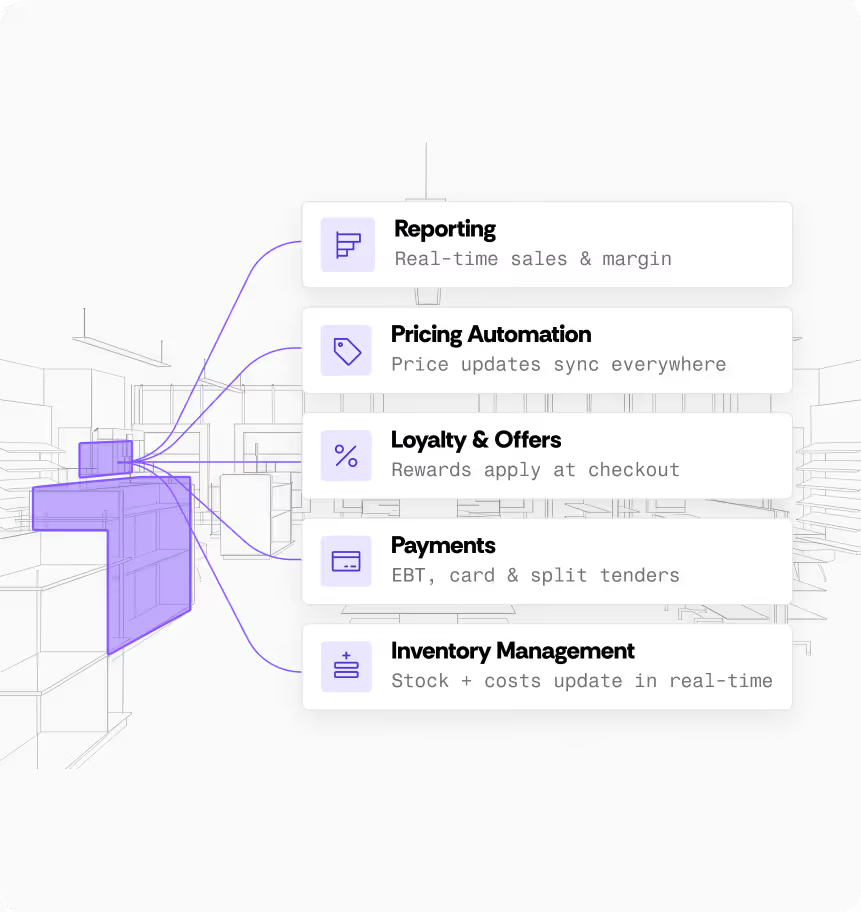
POS, Pricing, Inventory, Loyalty: Why Your Grocery Tools Need to Share the Same Data
Learn why the problem isn't your grocery tools but the gaps between them. When POS, pricing, inventory, and loyalty don't share data, you lose margin you can't see. Here's what connecting them changes.
POS, Pricing, Inventory, Loyalty: Why Your Grocery Tools Need to Share the Same Data
Learn why the problem isn't your grocery tools but the gaps between them. When POS, pricing, inventory, and loyalty don't share data, you lose margin you can't see. Here's what connecting them changes.
Explained
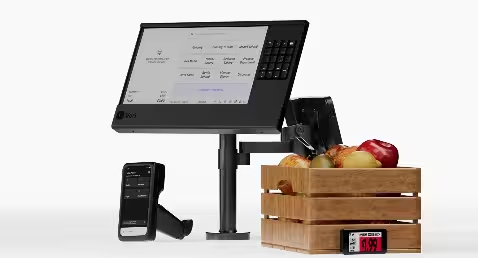
The Complete Guide to Grocery Store Management Software in 2026 (Features That Actually Matter)
Most grocery store management software is built for general retail, not grocery. Here are the capabilities that actually matter for independent stores, and why they only pay off when they connect.
The Complete Guide to Grocery Store Management Software in 2026 (Features That Actually Matter)
Most grocery store management software is built for general retail, not grocery. Here are the capabilities that actually matter for independent stores, and why they only pay off when they connect.
Buyer's Guide